ALBANIA: EUROPE'S NORTH KOREA OF THE 1970s
Hey guys!
Albania was honestly one of the biggest surprises of my last trip! And not because I was expecting it to be amazing. Actually… quite the opposite. Before going, I have to admit something: I was a little scared to travel there alone.
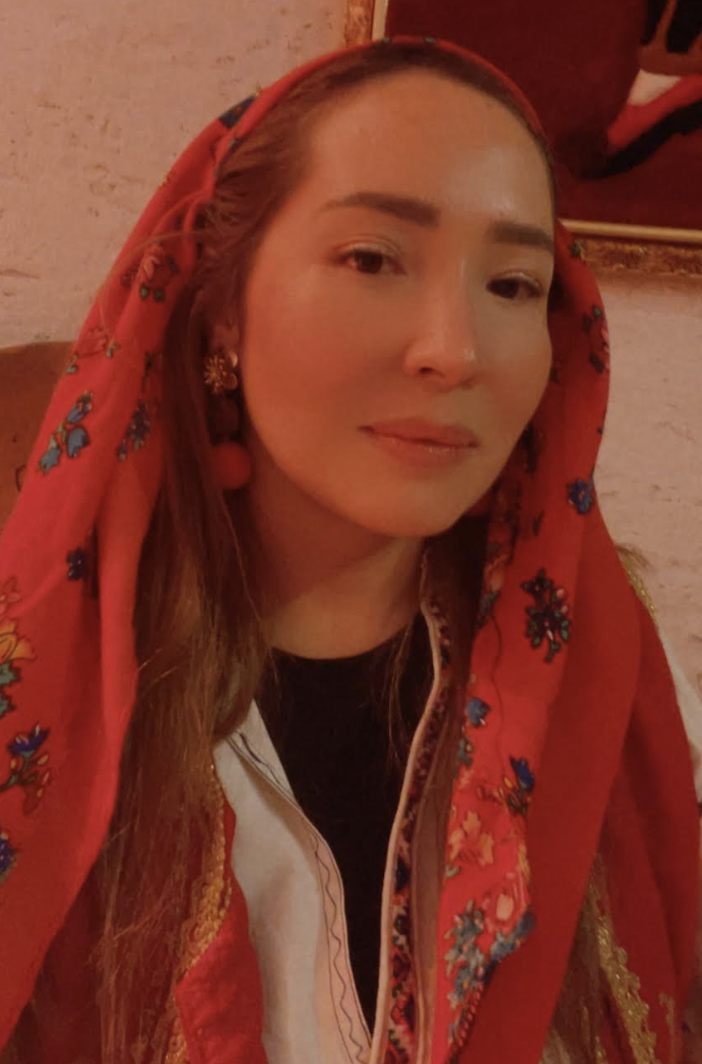
Traditional Albanian dress
I had heard all kinds of things about Albania. I had this idea in my head that it was dangerous, that I should be careful, that maybe walking around alone at night wasn't such a good idea.
So imagine me arriving in Tirana around 10 PM. I went to my Airbnb. And by 11 PM? I was starving. So I did what I would normally do anywhere: I left the apartment alone to find something to eat. And suddenly I'm walking around Tirana at night.
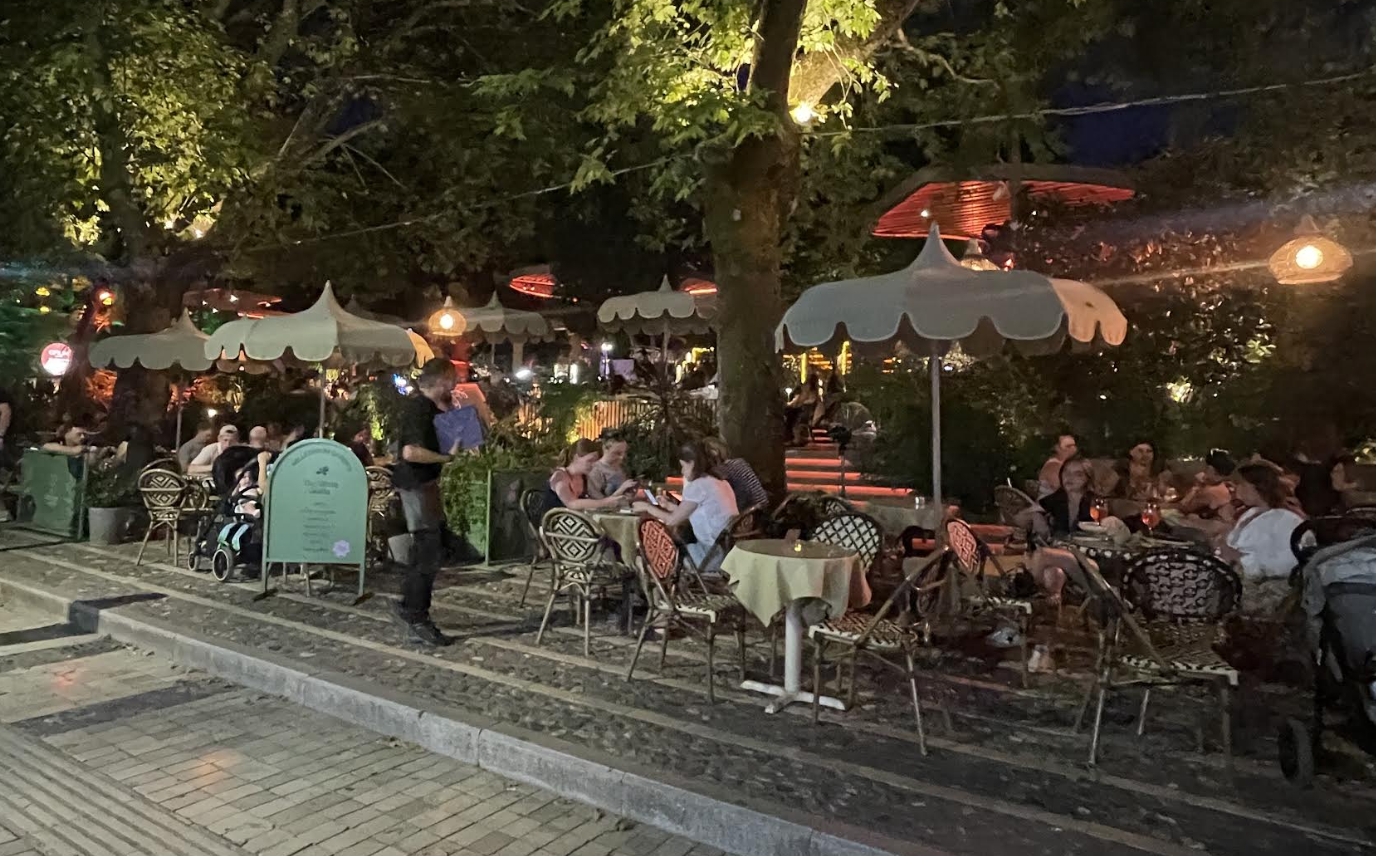
Restaurants everywhere, bars, shisha places. People sitting outside, eating, drinking and talking. People everywhere. And I remember thinking: Wait… why did I think this was going to be dangerous? I actually felt incredibly safe. The city was alive. It felt like nobody wanted to go home.
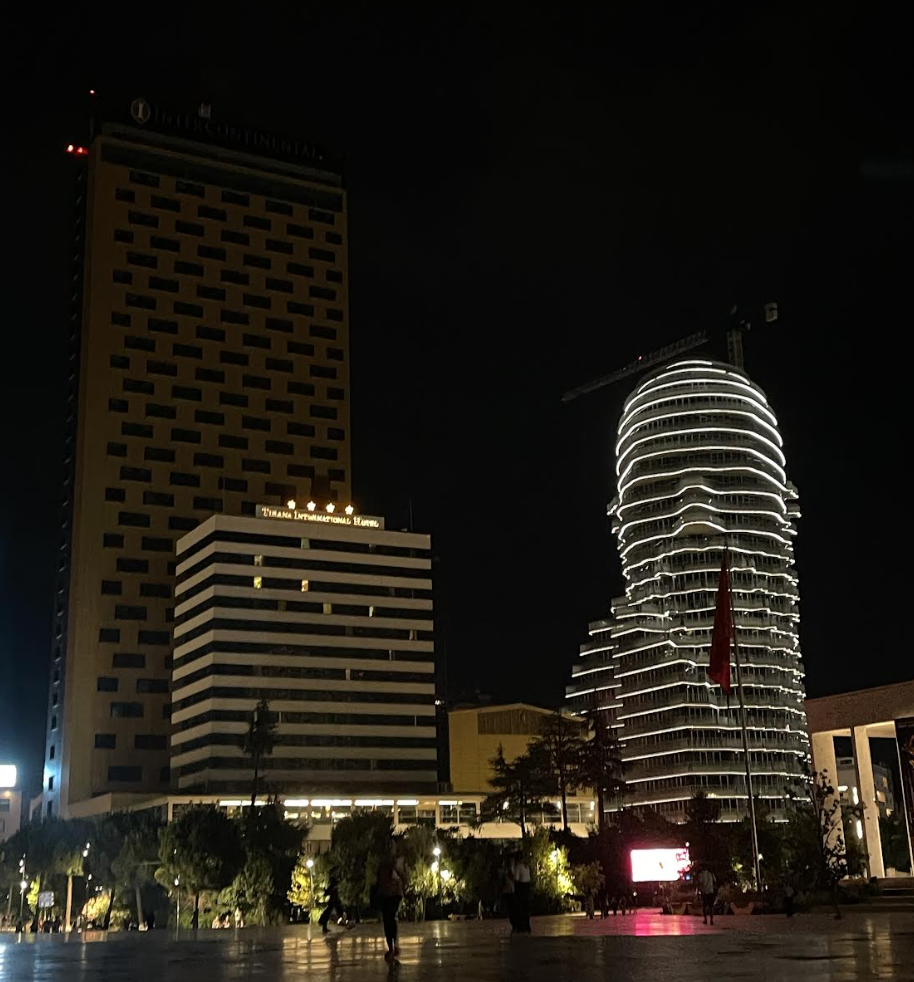
Tirana, Albania at midnight
Tirana didn't sleep. And that was my first surprise.
But then came the second one: the more I learned about Albania's history, the more I started understanding the country I was actually seeing in front of me. Because Albania is not just another Balkan country. It has one of the most unusual histories in Europe.
Think about everything that has shaped this tiny country: ancient Illyrian peoples, Rome, Byzantium empire, the arrival of the Venetians, the Ottoman Empire, Islam, Catholicism, Orthodox christians, Bektashi Sufism, Italy, fascism, communism. And then one of the most extreme periods of isolation in modern European history.
Kalaja e Tiranes, Tirana Castle an historial fortificationfrom the Byzantine era. Today is a place with restaurants and shops.
Suddenly, things I had noticed during my trip started making sense:
The enormous portions of food
The Italian I heard everywhere
The obsession with cars
The bunkers
The way older people talked about the past.
Even the energy of Tirana. And that is what I found fascinating.
In Albania, history doesn't feel like something locked inside a museum. You can literally see it on the street.
So let's go back in history, but don't worry. We're not going all the way back for a 500 page history lesson. We just need to understand how Albania became… Albania.
BEFORE HOXHA (their communist leader), THERE WAS A WHOLE LOT OF HISTORY
Long before there was a country called Albania, this part of the Balkans was home to different ancient peoples generally grouped under the name Illyrians. And this is where things get interesting.
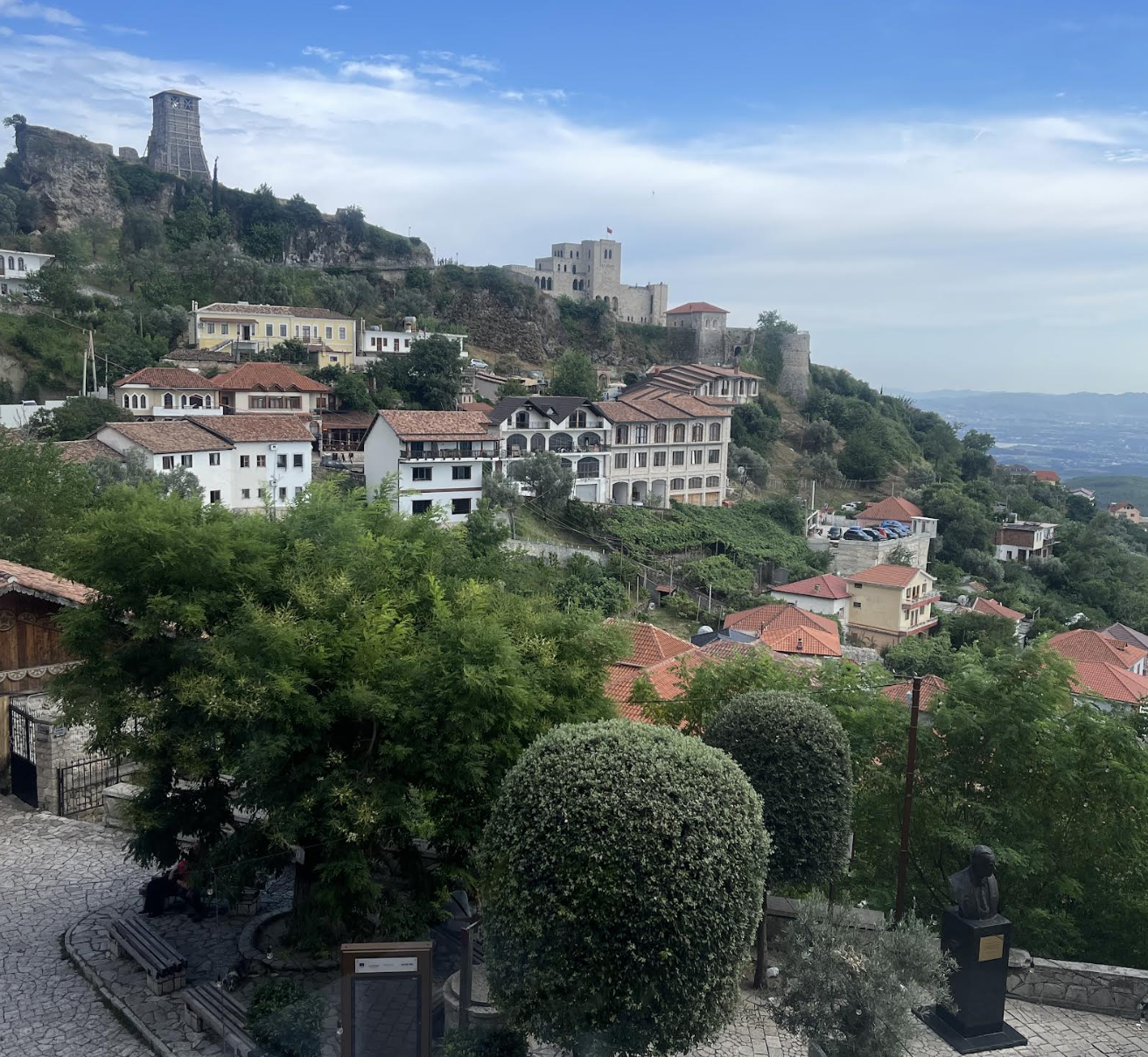
The historical city of Kruja and the heart of the national pride of the Albanians, the birth place of Skanderberg
Albanians often have a very strong connection to the ancient Illyrians, although the exact relationship between ancient Illyrian peoples and modern Albanians remains a subject of historical and linguistic debate.
The Illyrians were not one single unified nation. They were different tribes and political communities living across parts of the western Balkans, including territories corresponding to much of modern Albania.
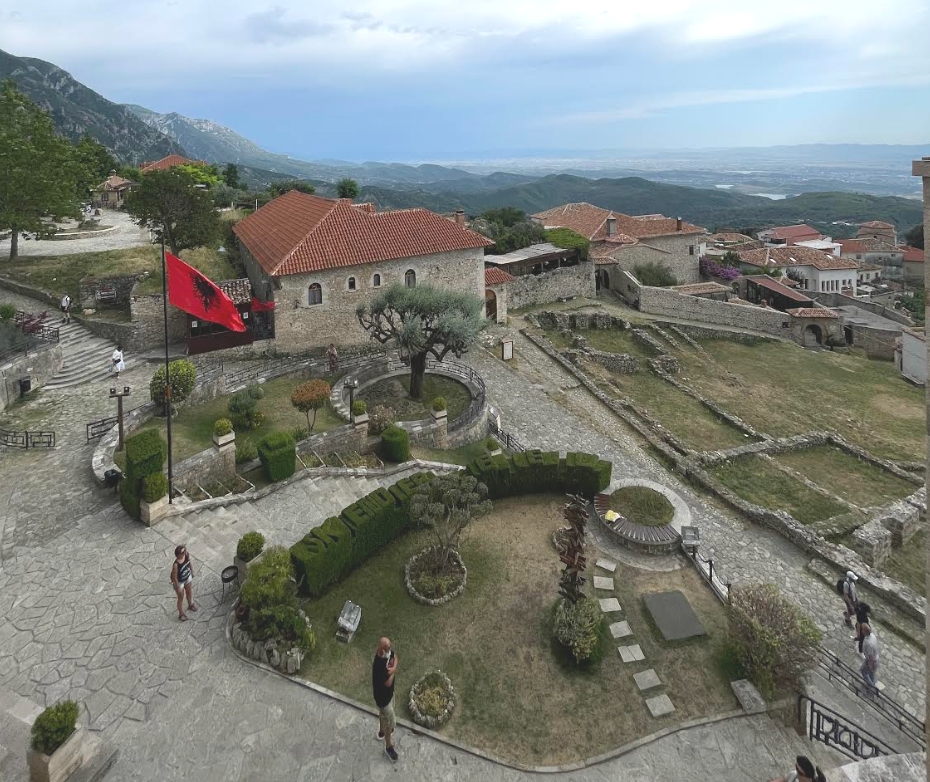
Kruja Museum and Fortress
They traded across the Adriatic and had fortified settlements. They interacted with Greek communities and nd eventually, they came into conflict with Rome. And here's something I always find interesting when people use the word "barbarian." To the Greeks and Romans, it generally meant someone outside their cultural and political world.
It didn't automatically mean primitive or uncivilized. So when you hear that the Illyrians were "barbarians," think: "People outside the Greek and Roman cultural sphere." And not: "People living in caves." Eventually, Rome took control of the region, and this part of the Balkans became connected to the Roman world and later the Byzantine sphere.
And Albania's location mattered….It sits right across the Adriatic from Italy, so it was never completely disconnected from the Mediterranean.
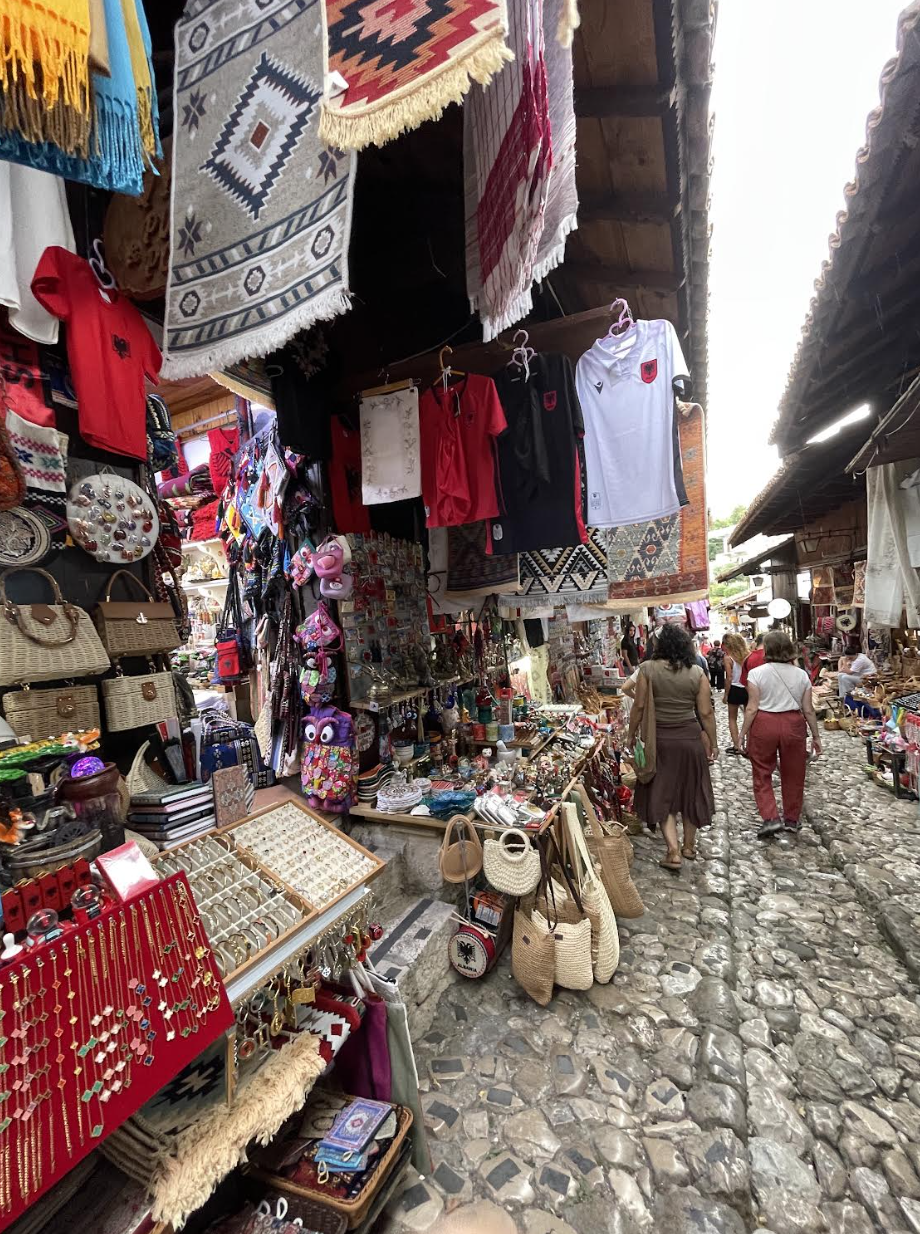
The old Bazaar of Kruja from XVII century, Albania
Venice later established influence along parts of the coast, and even the Albanian communities became connected to Venetian trade and political networks. There is even the Scuola degli Albanesi (a community and religious association created by Albanians living in Venice), a reminder of the Albanian presence in the city.
Then came the Ottoman Empire. From the late Middle Ages, Ottoman power expanded through the Balkans, and Albania gradually became part of the Ottoman Empire during the 14th and 15th centuries. This is when Islam became an important part of Albanian society.
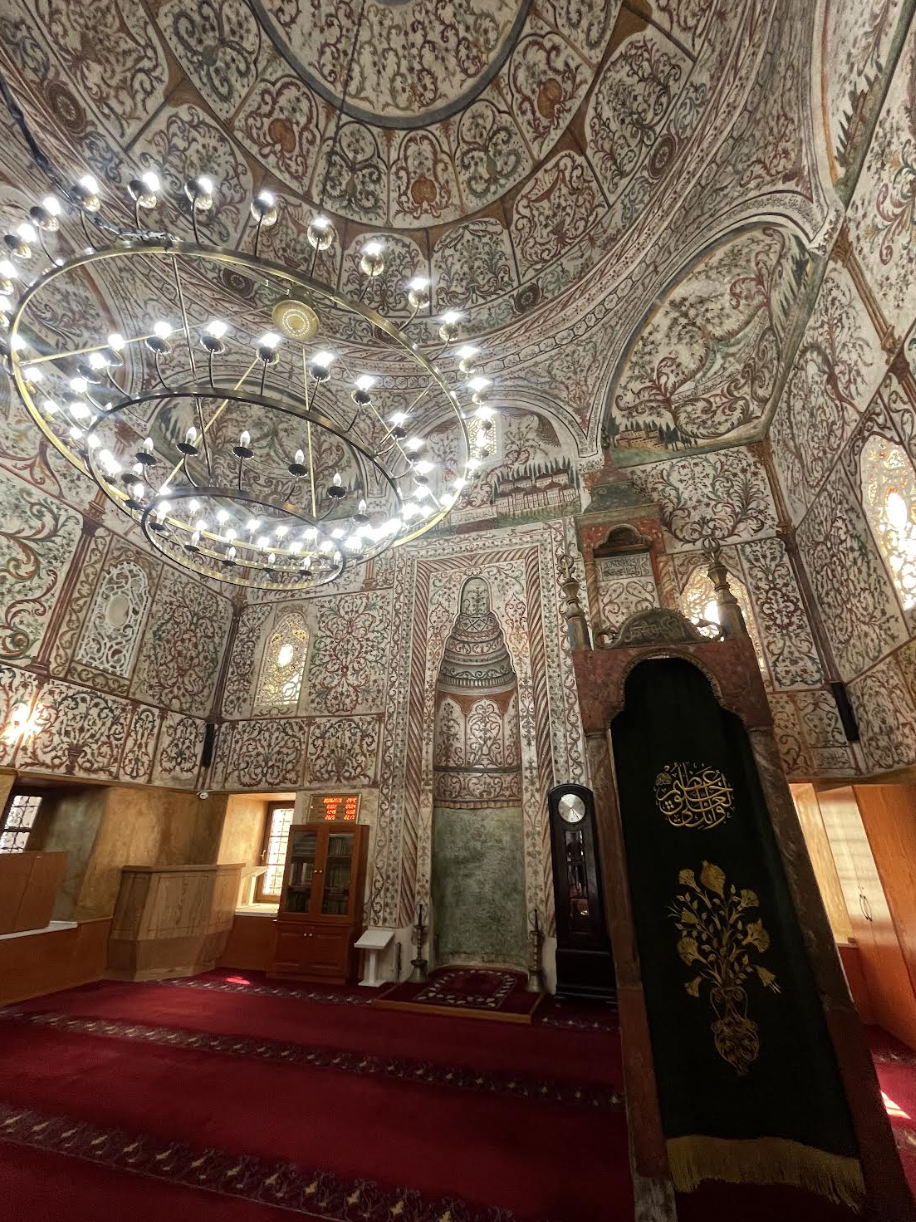
Et’hem Bey Mosque
Islamization happened gradually over centuries, for a mixture of political, social, economic and religious reasons. And Albania remained religiously diverse: catholics, orthodox Christians, sunni Muslims and bektashis. Bektashis are to me one of the most fascinating parts of Albanian culture.
The Bektashi tradition is a Sufi Islamic order with deep historical connections to Anatolia and the Ottoman world. It developed around the teachings of Haji Bektash Veli, a 13th-century mystic associated with Khorasan and Anatolia. Then, in 1925, Turkey banned Sufi orders with Attaturk, and the Bektashi leadership eventually moved its headquarters to Albania.
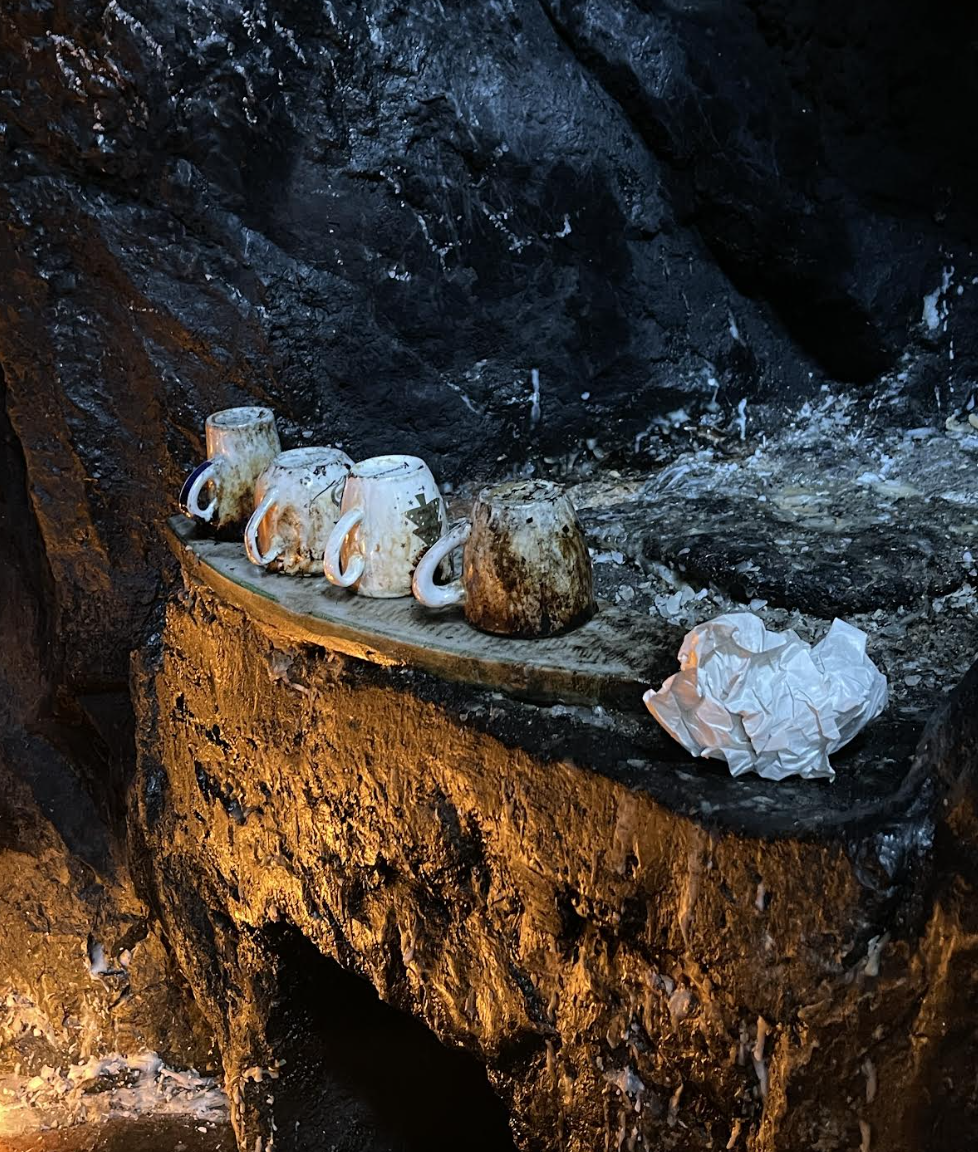
Sari Saltëk temple from the Bektashi religion
And today? The World Bektashi Headquarters is in Tirana! And if you've ever heard the word dervish, it basically refers to a member of a Sufi spiritual tradition following a disciplined religious and mystical path. They have their own history, practices and philosophy.
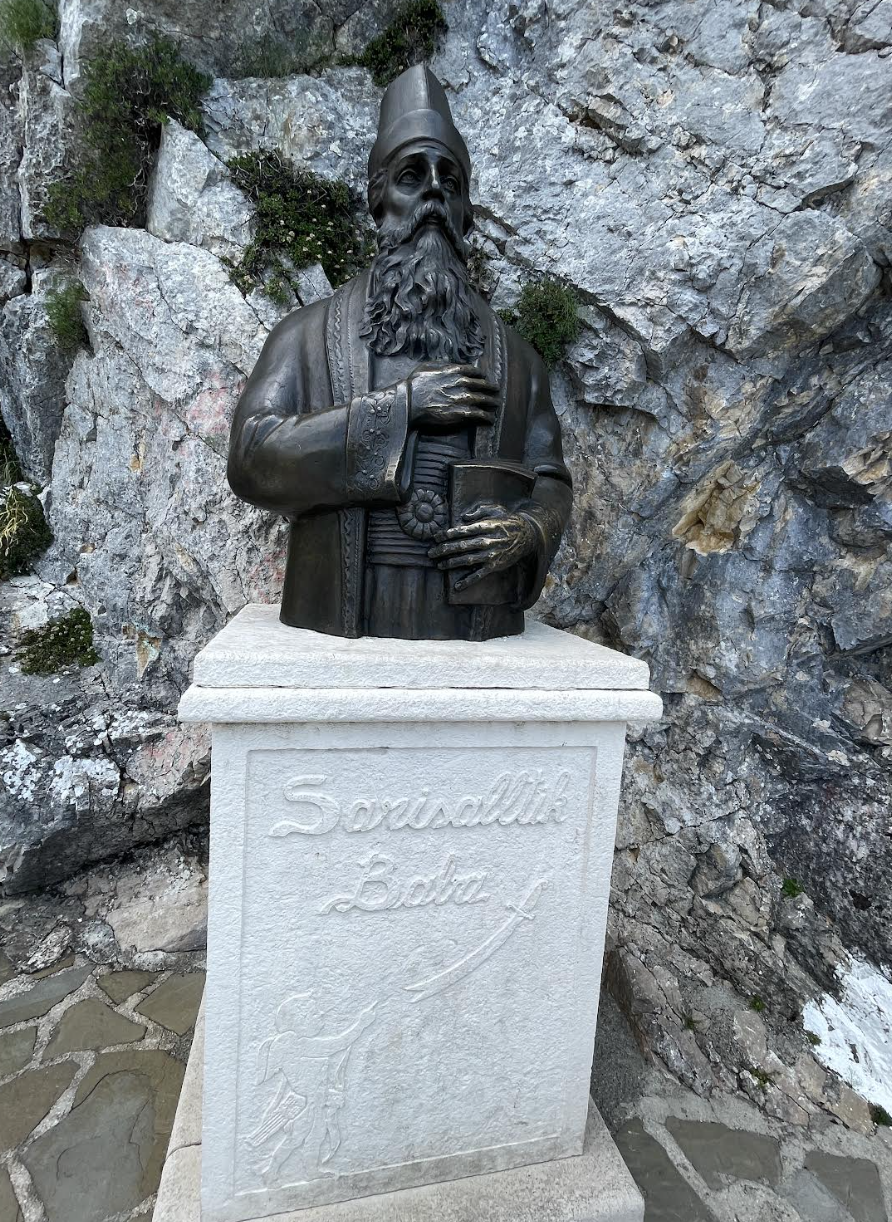
Sari Saltik was a XIII century dervish and a major figure in Bektashi Sufi tradition. He is associated with the spread of Islam and Sufism throughout the Balkans
Now… there is one name you absolutely need to know if you're going to understand Albania: Skanderbeg. His real name was Gjergj Kastrioti, an Albanian nobleman who had served in the Ottoman military before returning to his homeland. In 1443, he took control of Krujë and became the central figure of a major Albanian resistance against Ottoman expansion. He died in 1468, but his story didn't end there.
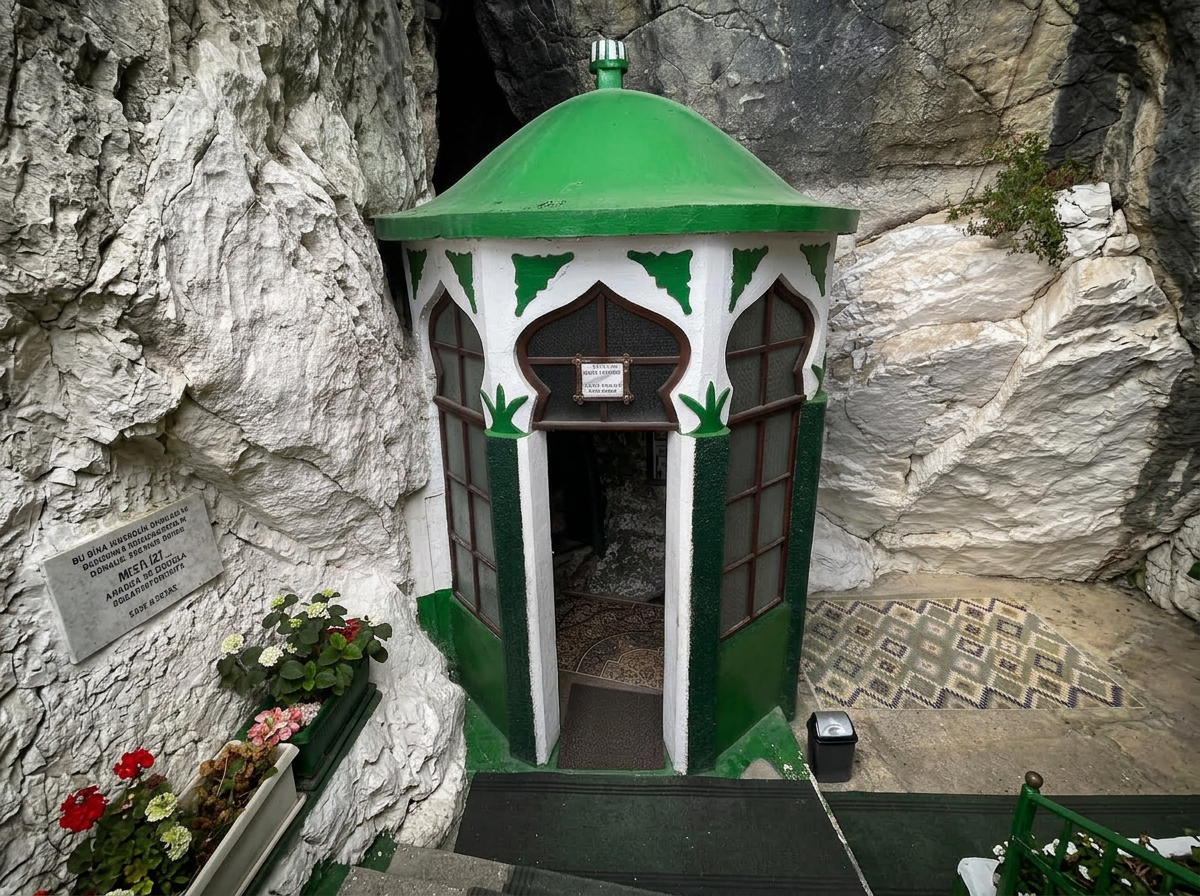
Teqe of Sari Saltek, muslim shrine and cave where this religious leader lived.
Over the centuries, Skanderbeg became one of the most important symbols of Albanian national identity. And once you travel through Albania, you realize just how important he is: statues, squares, museums, streets and flags. His name is everywhere.
Then, in the 19th century, the Ottoman Empire was weakening and nationalism was spreading throughout Europe. Albanians increasingly organized around something that sounds simple but was incredibly important: language. This period became known as the Albanian National Awakening, or Rilindja.
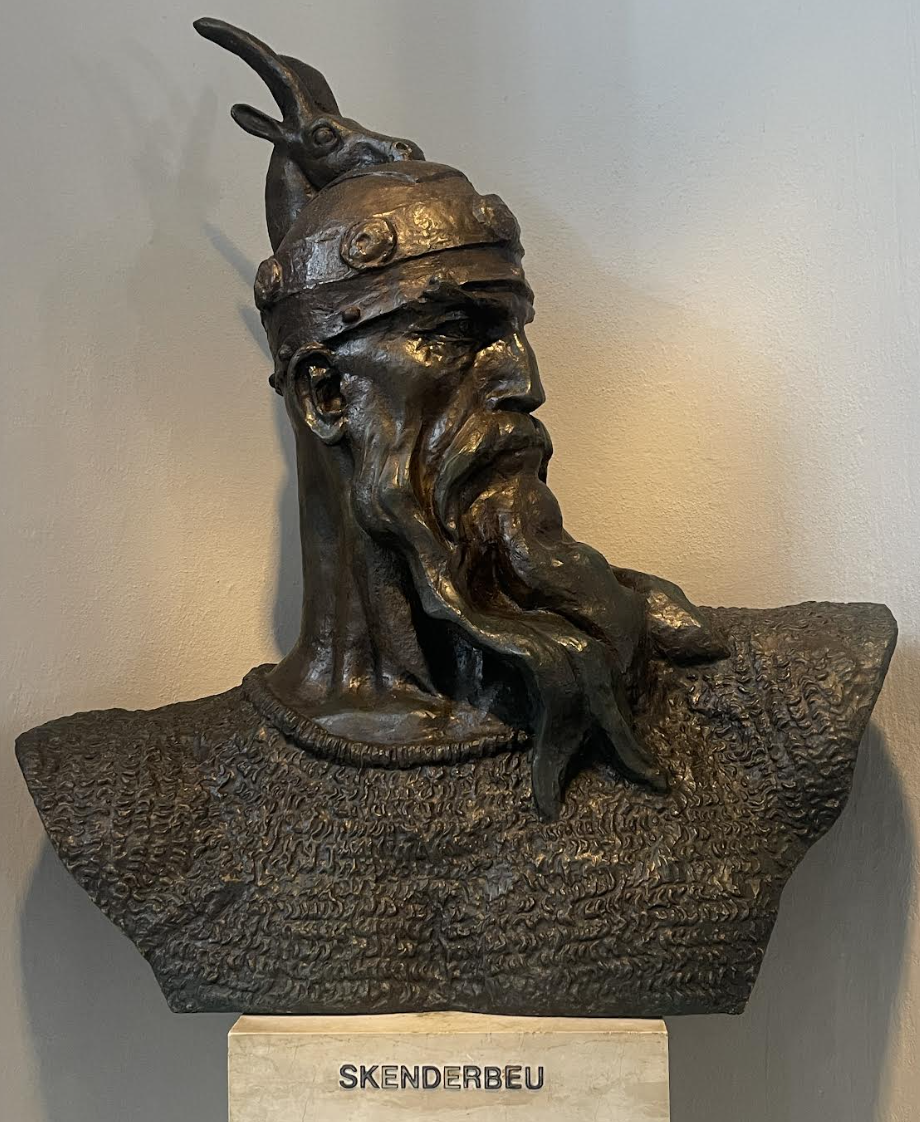
Skenderberg, the albanian nation hero that stopped the Ottomans
Intellectuals, writers and activists pushed for Albanian language in education, literature, cultural institutions, political organization and eventually independence. And language mattered enormously.
Why? Because Albanians belonged to different religious communities, for this reason the Albanian language became something that could connect people across those religious differences.
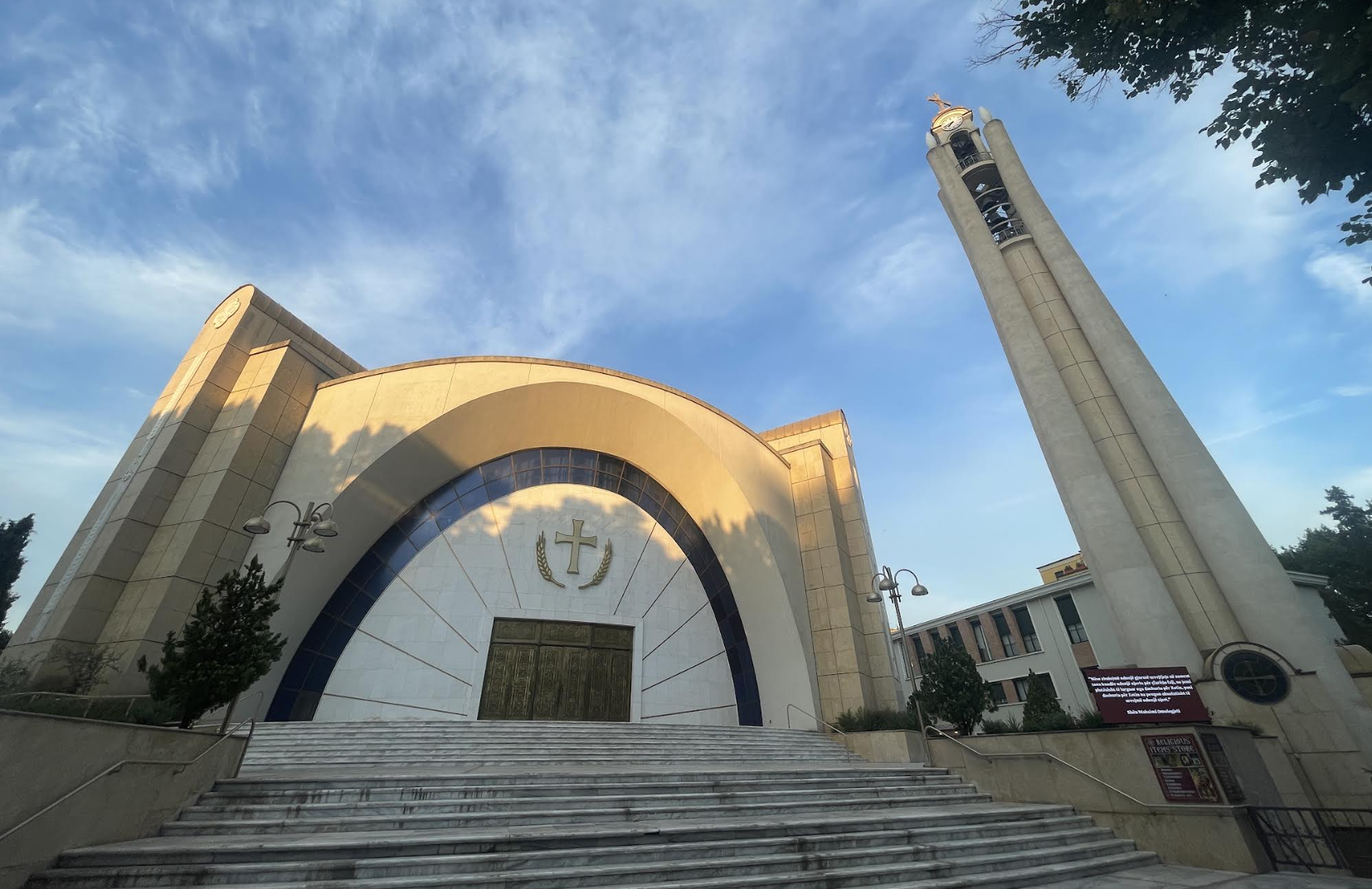
Saint Paul catholic church in Tirana
Then came 1912. The Ottoman Empire was collapsing and the Balkan Wars were changing the map. On November 28, 1912, Ismail Qemali and other Albanian representatives declared independence in Vlora. Modern Albania was born. But, of course, nothing in Balkan history is ever that simple…
Many territories inhabited by Albanians ended up outside the new Albanian state, as borders were negotiated and imposed in the context of the Balkan Wars and the interests of surrounding powers.
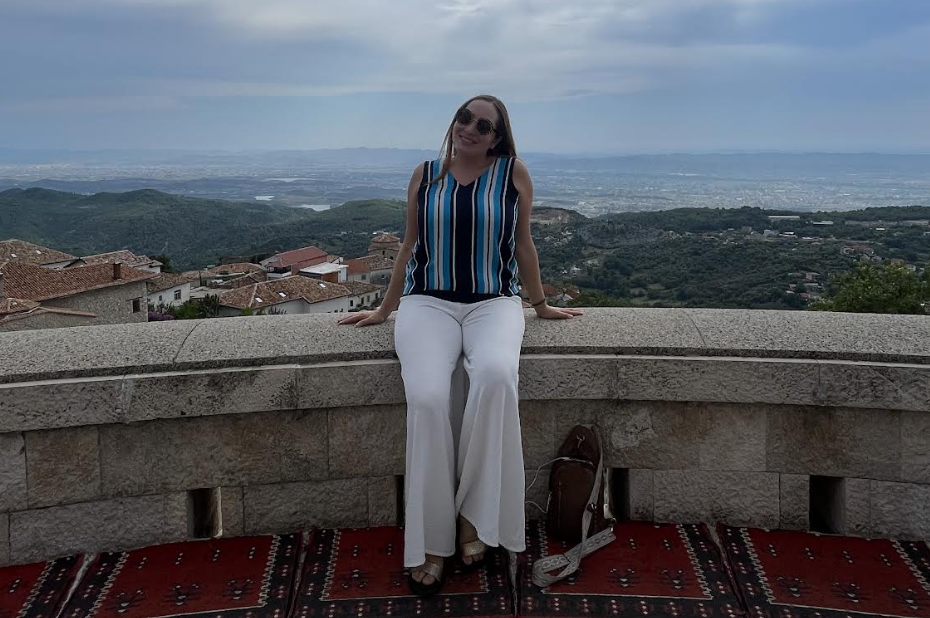
The Albanian country side
And as if that wasn't enough, Italy came…. On April 7, 1939, Fascist Italy invaded Albania. Italy incorporated Albania into its fascist imperial project, and Fascist propaganda deliberately used ancient Roman history, archaeology and cultural heritage to project Italian power across the Adriatic.
Then came World War II. And after the war? Albania entered a completely different world… One that would transform the country more dramatically than almost anything that had happened before: Enver Hoxha.
THEN ALBANIA CLOSED ITS DOORS TO THE WORLD
After World War II, Albania became a communist state under Enver Hoxha. And this is where the story gets wild. Because Albania wasn't immediately the completely isolated country that people sometimes imagine.
After World War II, it initially had extremely close relations with Yugoslavia but hose relations broke down in 1948. Albania then moved closer to the Soviet Union, received economic and military support from the Soviet bloc and joined the Warsaw Pact in 1955. Then Hoxha broke with Moscow. Albania increasingly aligned itself with China. And eventually, that relationship broke down too.
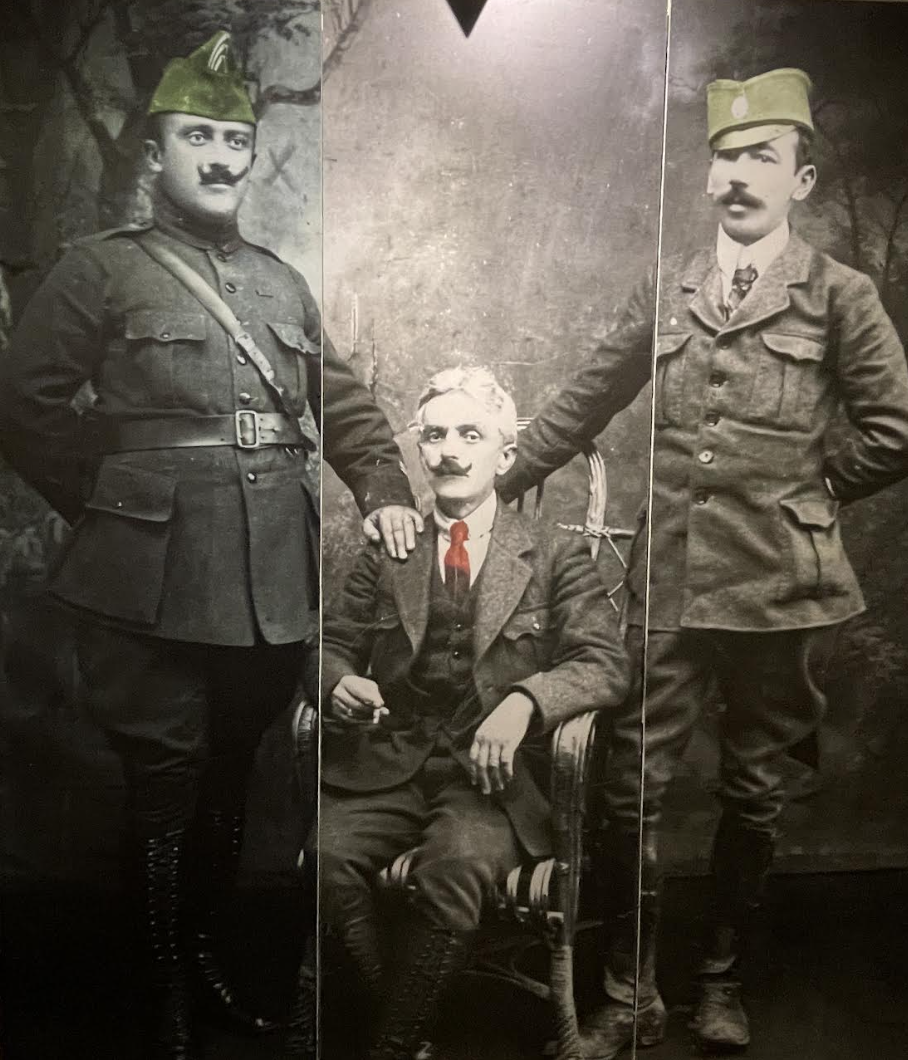
Albanian Gerdarmerie
In 1978, China ended its economic and military assistance to Albania. And this is when things became extreme. Albania was increasingly on its own.
Basically: "Fine. We'll do it ourselves." From there, Albania became one of the most isolated countries in Europe. And this is the part of Albanian history that I find almost impossible to imagine. Imagine growing up in a European country where contact with the outside world becomes incredibly restricted:
Foreign influence was viewed with suspicion.
Travel abroad was extremely limited.
Private cars were prohibited for ordinary citizens.
Western culture was heavily restricted.
And even something as ordinary as wearing jeans could become politically problematic.
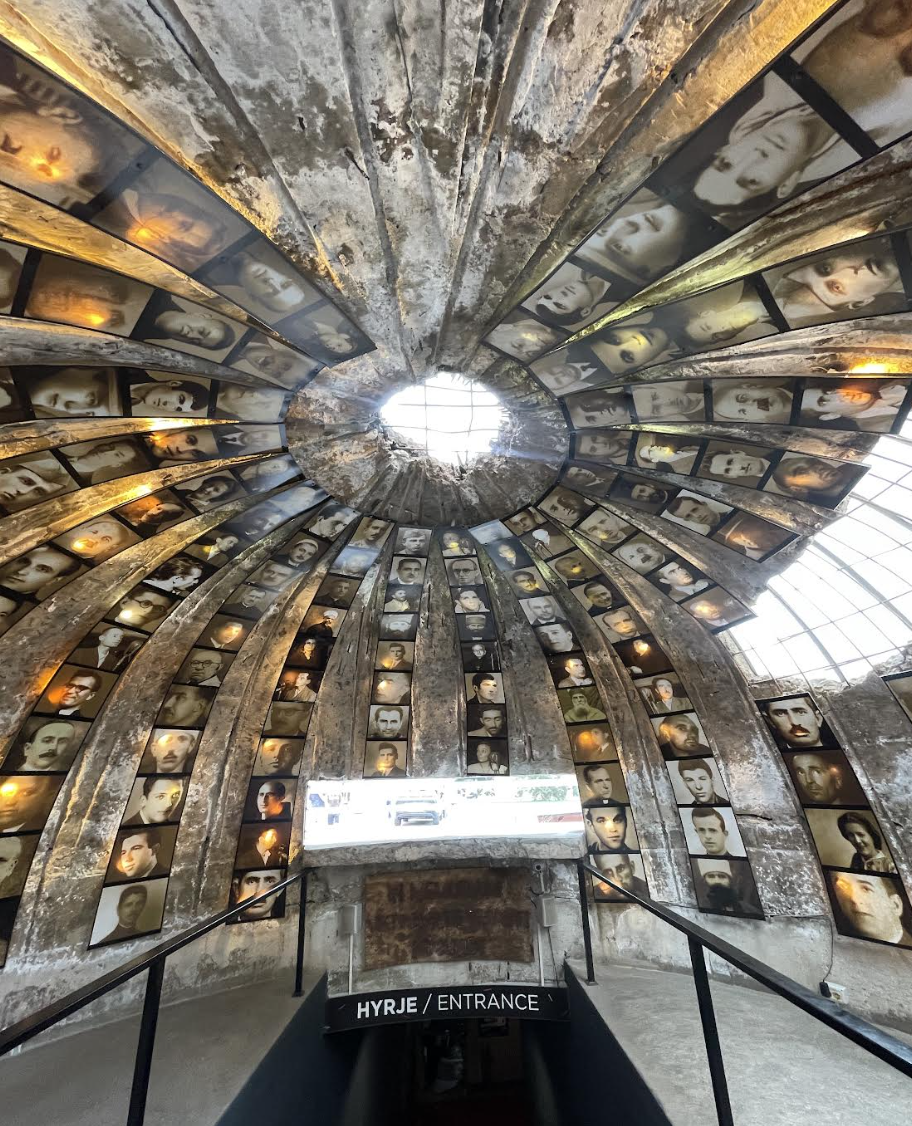
Bunker Museum, Tirana
The tour guide In Tirana told us stories about growing up during this period. And one detail really stuck with me. He told us that when he was growing up, even bananas could be extremely difficult to find and people could eat meat once per month!
Today, you walk into a supermarket, see a bunch of bananas and don't think twice. But imagine growing up in a country where something so ordinary could feel exotic. That gives you an idea of how disconnected Albania had become from the consumer world around it.
And then there was religion.
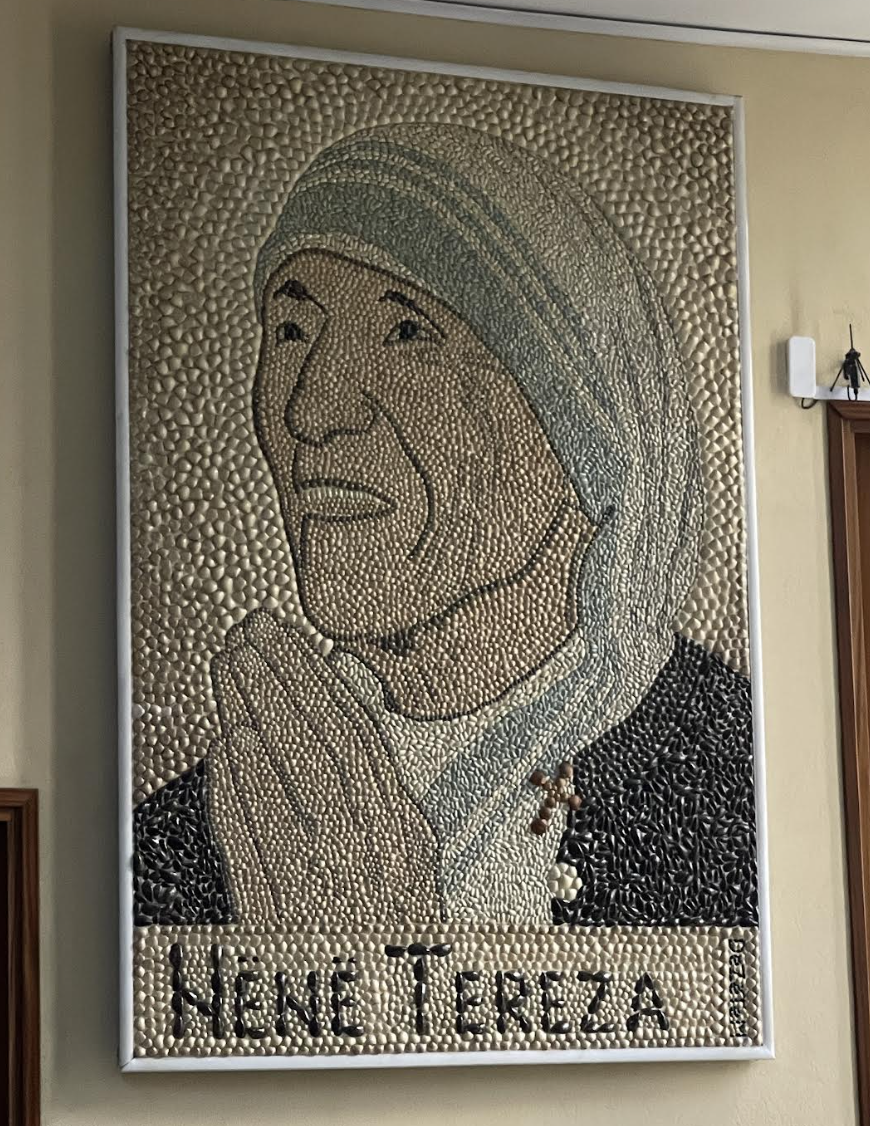
Mother Theresa was Albanian ethnically
In 1967, the communist government launched a radical campaign against religion: mosques, churches, monasteries, and religious buildings were closed. Religious practice was banned. Albania eventually declared itself the world's first officially atheist state, and the 1976 constitution reinforced that position.
Think about that for a second. This was a country that had spent centuries developing through completely different religious traditions. And then the state basically said: None of it.
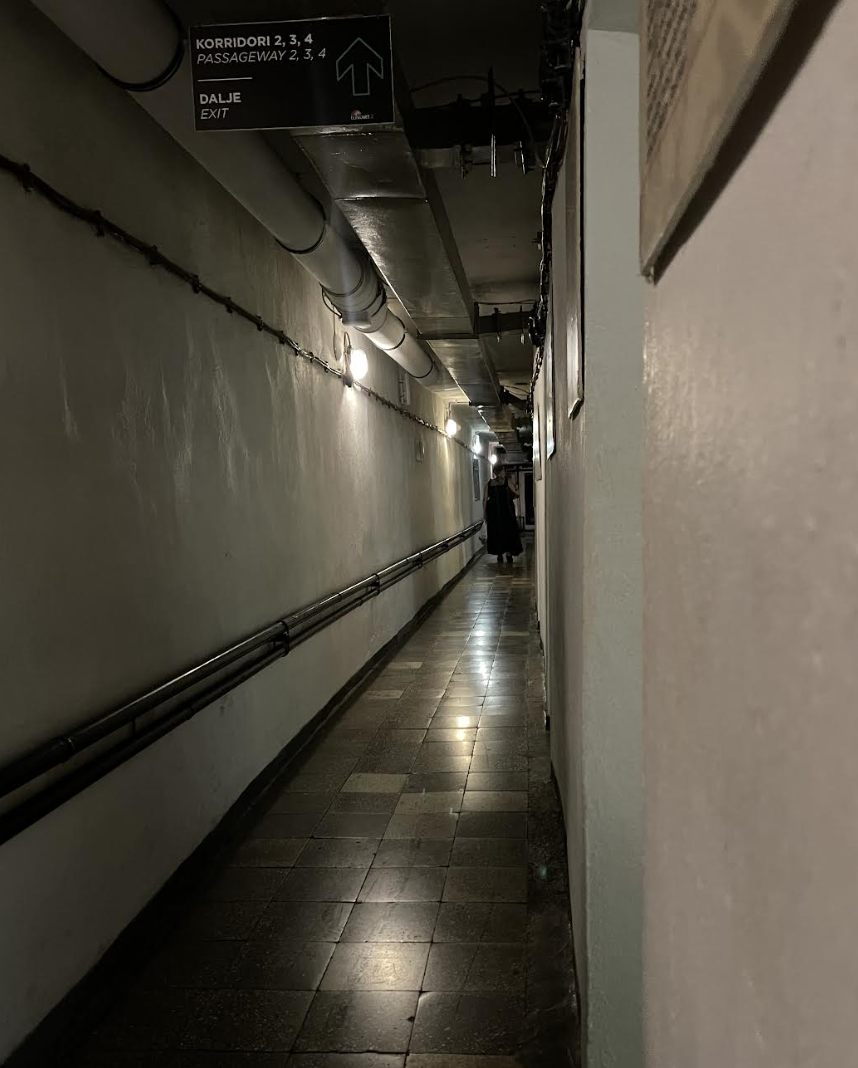
Bunker Art Museum, Tirana
That was the Albania many people grew up in. A country where the state wasn't simply controlling politics. It was trying to control what people could believe, what they could consume, where they could go and how they interacted with the outside world. And then there was the paranoia because Hoxha's government constantly feared invasion: from the Soviet Union, from Yugoslavia, from NATO, from the West, from basically anyone!
And that paranoia literally changed the landscape of the country.
700,000 BUNKERS?! YES, BUNKERS.
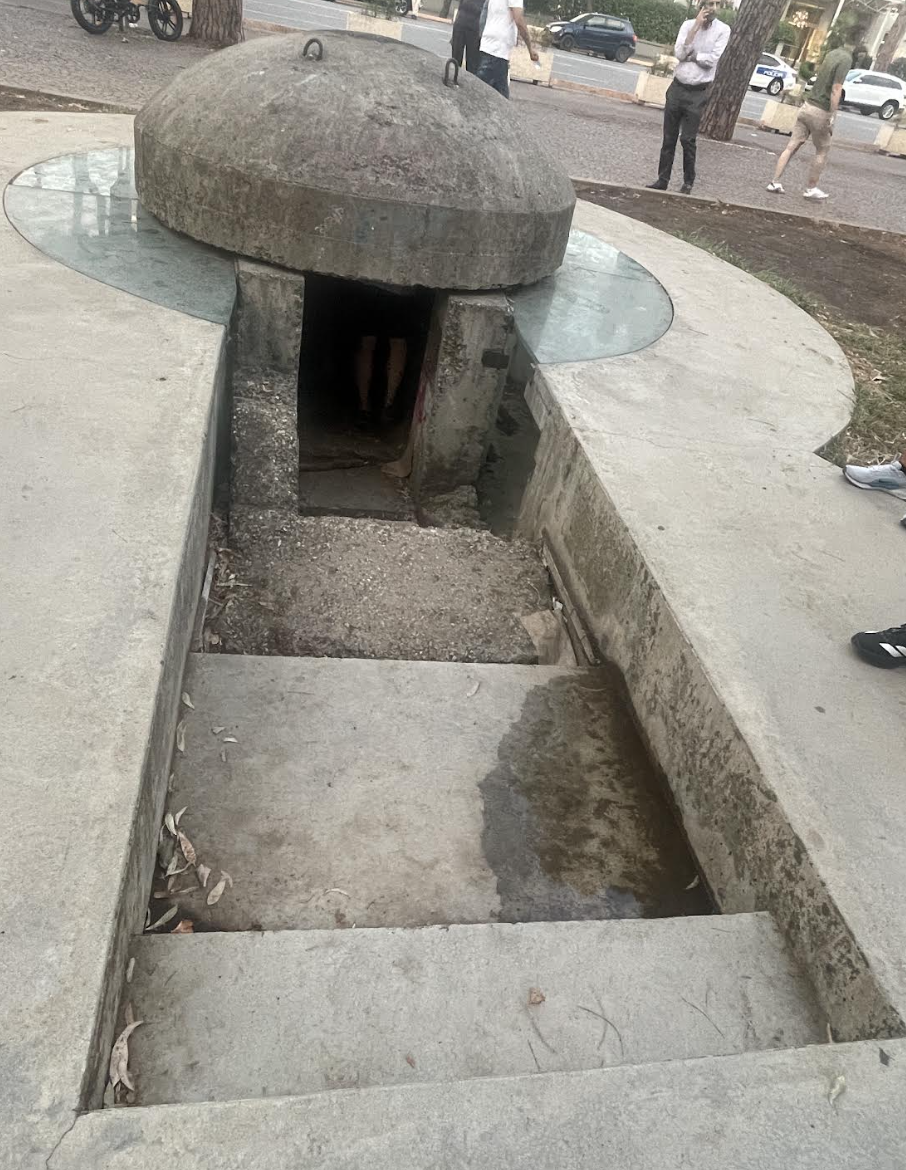
Bunkers in the city
Now let's talk about the thing you absolutely cannot miss when traveling around Albania. The bunkers. You drive, and there they are: on hills, beside roads, in fields, near beaches. Sometimes right next to someone's house. Tiny concrete domes, hundreds, thousands….Everywhere.
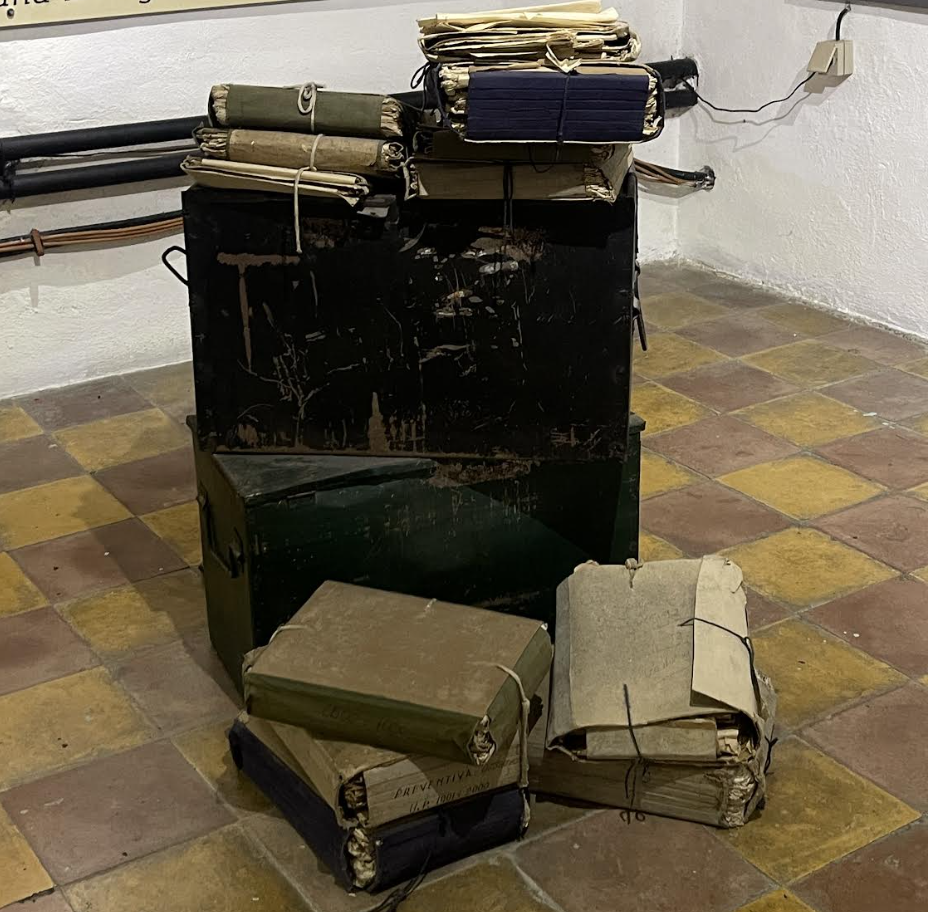
And you think: WHAT HAPPENED HERE? Under Hoxha, Albania developed an enormous system of military fortifications because the government constantly feared invasion. And this is where you hear one of the craziest numbers associated with the country: around 173,371 bunkers constructed by 1983, while other Albanian military research has estimated around 176,000.
And here's the really strange part: Most were never used for the invasion they were built to fight. Today, some are abandoned, others have become museums, restaurants, hotels, art spaces, and some are simply sitting there, slowly being taken over by nature.
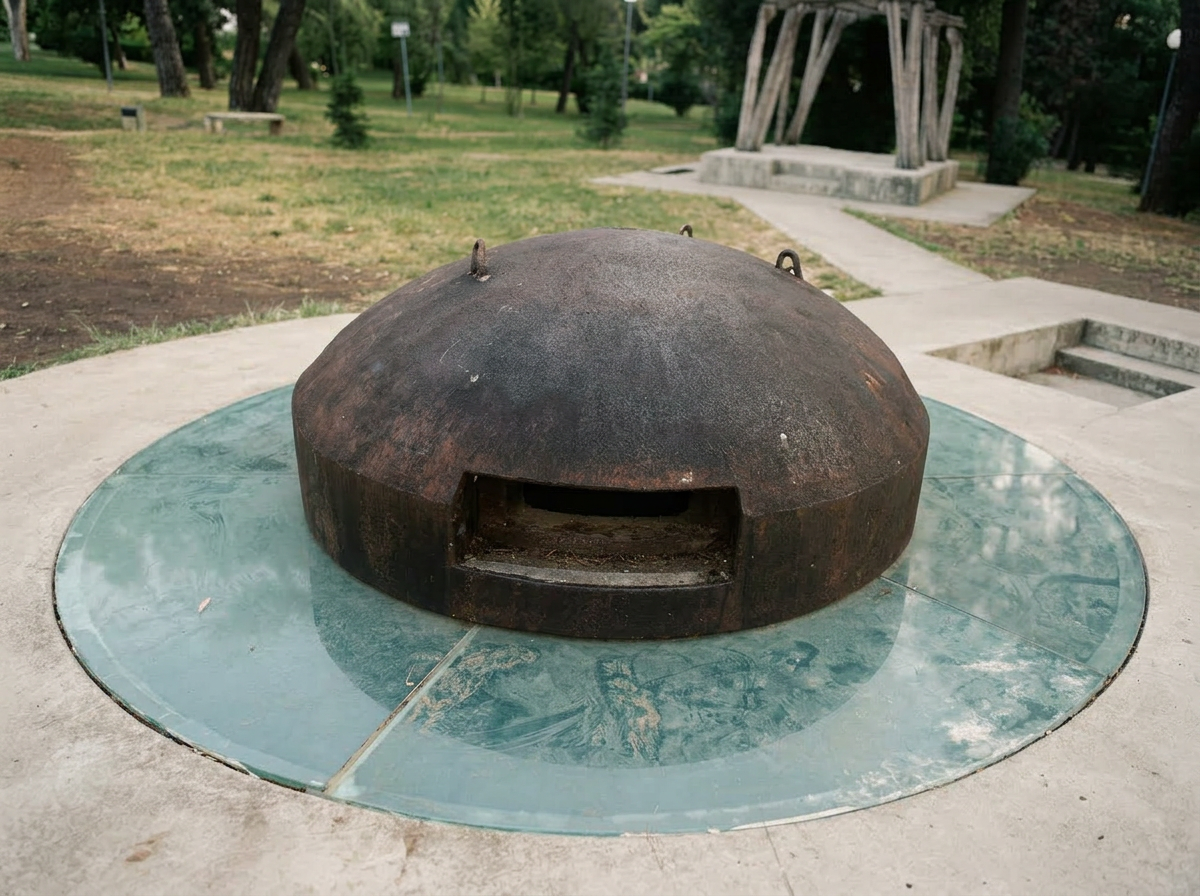
Bunkers
This is one of the strangest things about Albania. You don't need to visit a museum to find the past. Sometimes the past is literally sitting in a field, or beside the road, or blocking your view of the sea. And this is why, when you travel through Albania, the communist period doesn't feel like ancient history.
It's physically sitting there. You can touch it, you can photograph it, you can drive past it. And then you look at the people around you and realize how dramatically the country has changed.
WAS EVERYTHING TERRIBLE?
Now here's where the story gets more complicated. Because if you only tell the story as communism = everything was terrible, you miss important parts of what the system actually provided.
The communist government established universal systems of education and healthcare and literacy expanded. Employment was provided within the state-controlled economy. Housing was allocated by the state and officially, everyone was expected to have a job.
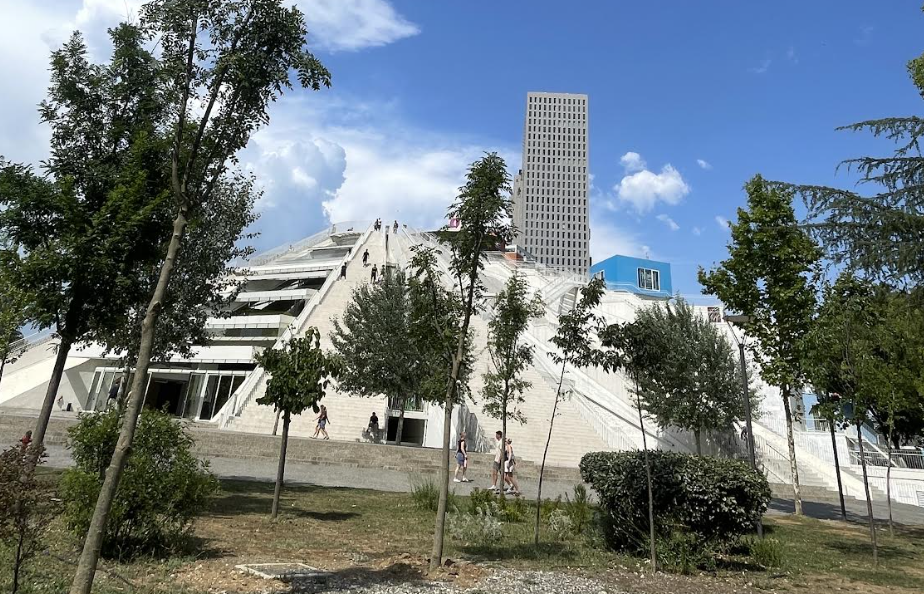
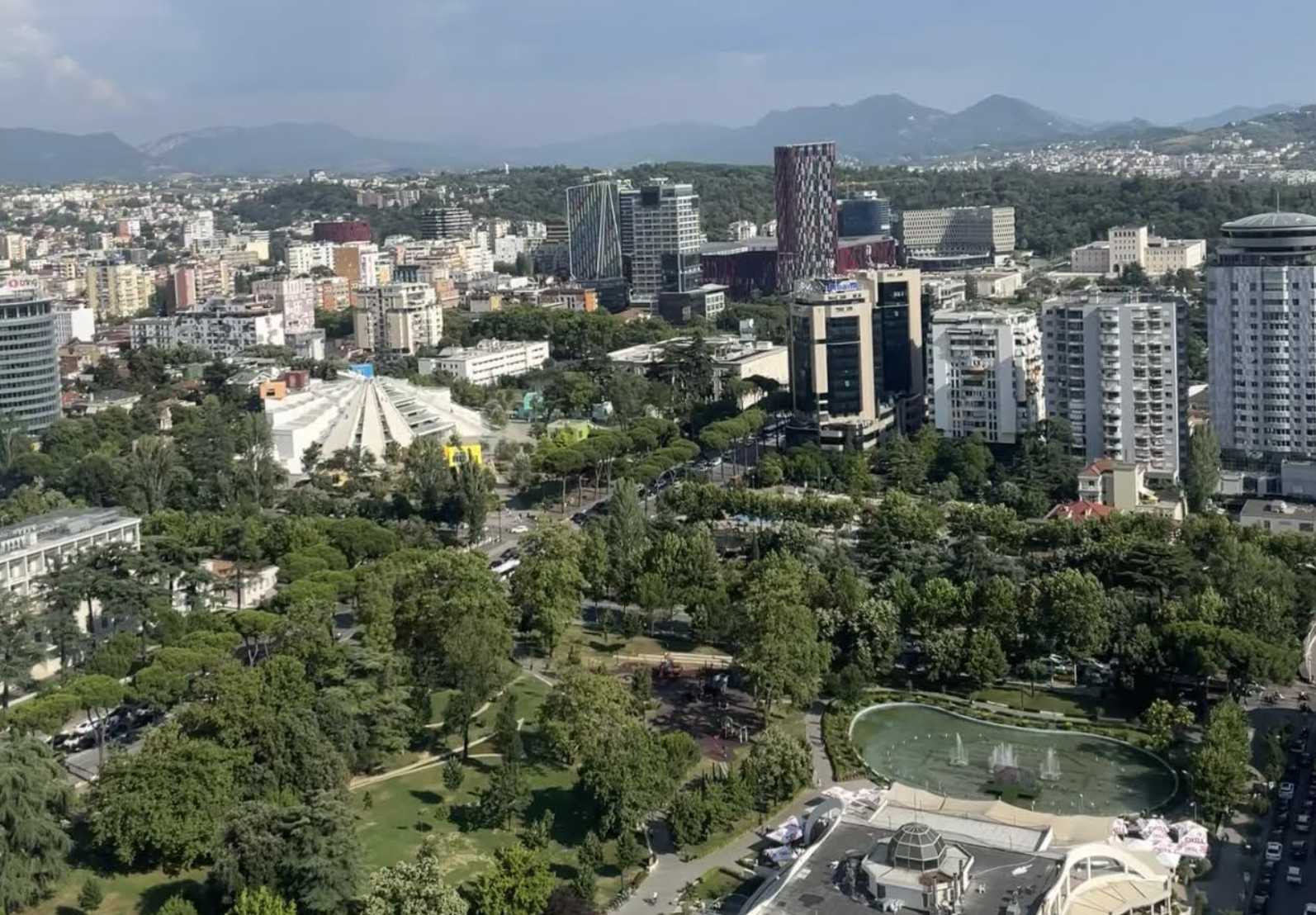
The pyramid of Tirana
For a population that had experienced poverty and instability, those systems could provide a degree of material security. But there was another side: the education system was heavily ideological, healthcare had serious limitations, particularly in equipment and resources. People had very little freedom to choose where they lived or worked.
And political repression was severe: there were prisons, labor camps, executions, surveillance, persecution of people considered enemies of the regime. So yes, you could have free healthcare, you could have a job, you could have housing. And at the same time, you could live under an authoritarian regime with almost no political freedom.
Both things can be true. And that's why I think Albania's history is so fascinating. It doesn't fit neatly into a simple good-versus-bad story.
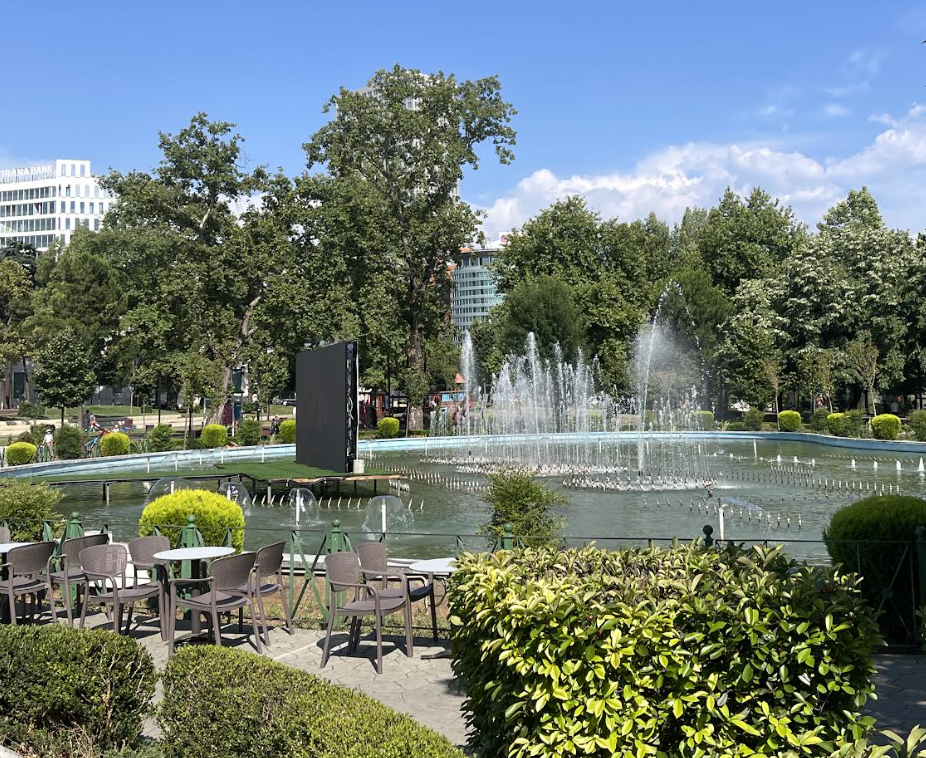
Tirana Downtown
Albania spent almost 45 years under communist rule, from the end of World War II until 1991.
But this is where another important distinction comes in. People sometimes say Albania was "isolated for 45 years." The country was indeed communist for roughly four and a half decades. But it wasn't isolated in exactly the same way throughout that entire period.
First Yugoslavia, then the Soviet Union, then China. Albania received assistance and maintained relationships with these countries at different stages. The truly extreme "we are completely on our own" period came after the break with China in 1978. That is when Albania became extraordinarily isolated from both the West and much of the communist world.
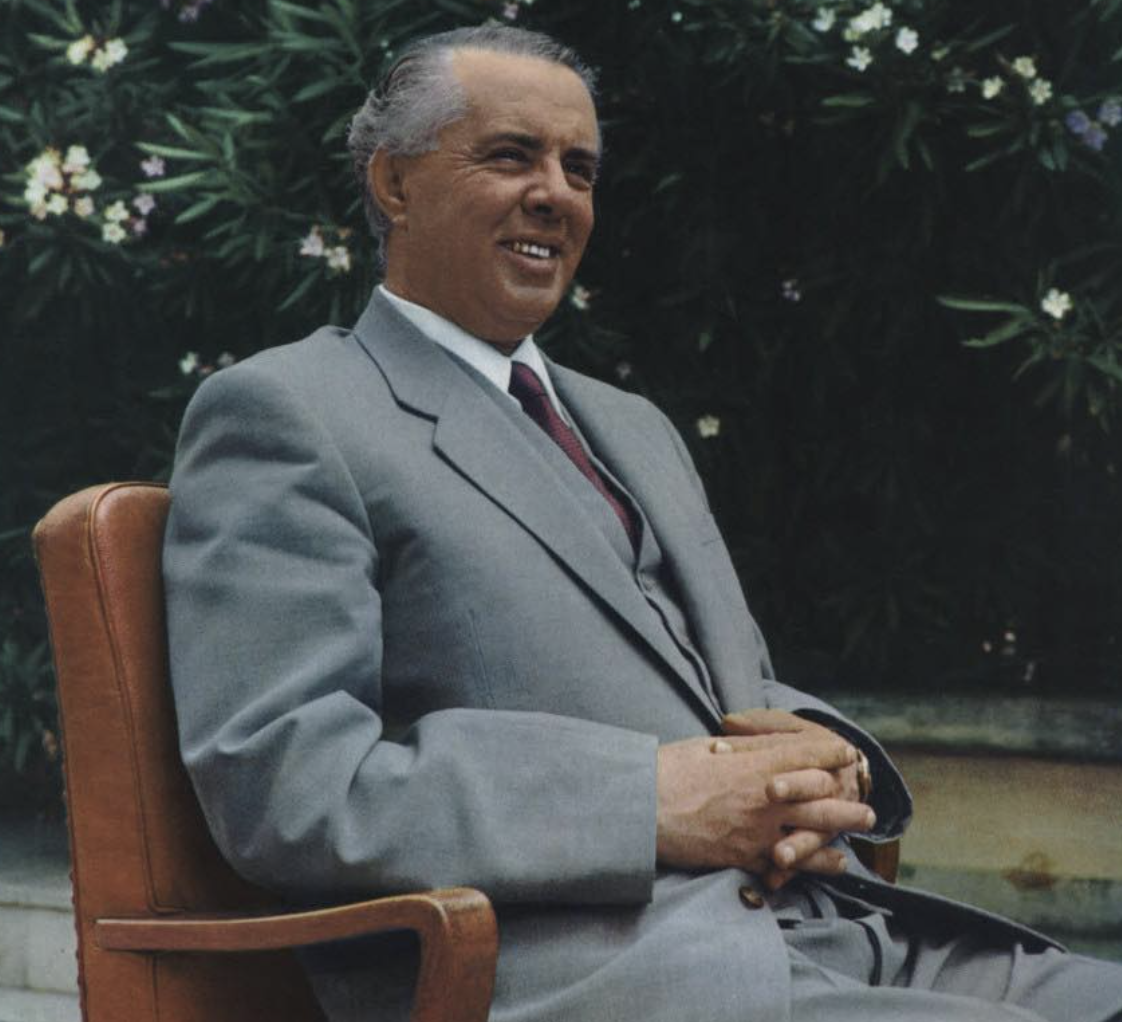
Enver Hoxha, the Albanian comunist dictator that isolated the country for 45 years
And this is why people sometimes compare Hoxha's Albania with North Korea.
The comparison comes from the extreme isolation, ideological control and highly centralized political system. The two countries were not identical, Their histories were different, their political systems were different.
Imagine being born in a country where your government constantly tells you that enemies are waiting outside. That was the world many Albanians grew up in.
And then…everything changed.
FROM ISOLATION TO MERCEDES, ITALIAN TV AND TIRANA AT NIGHT
The communist system collapsed…!
Suddenly, Albania opened to the outside world. And people wanted things they had been denied for decades: cars, western clothes, foreign products, travel, television, freedom.
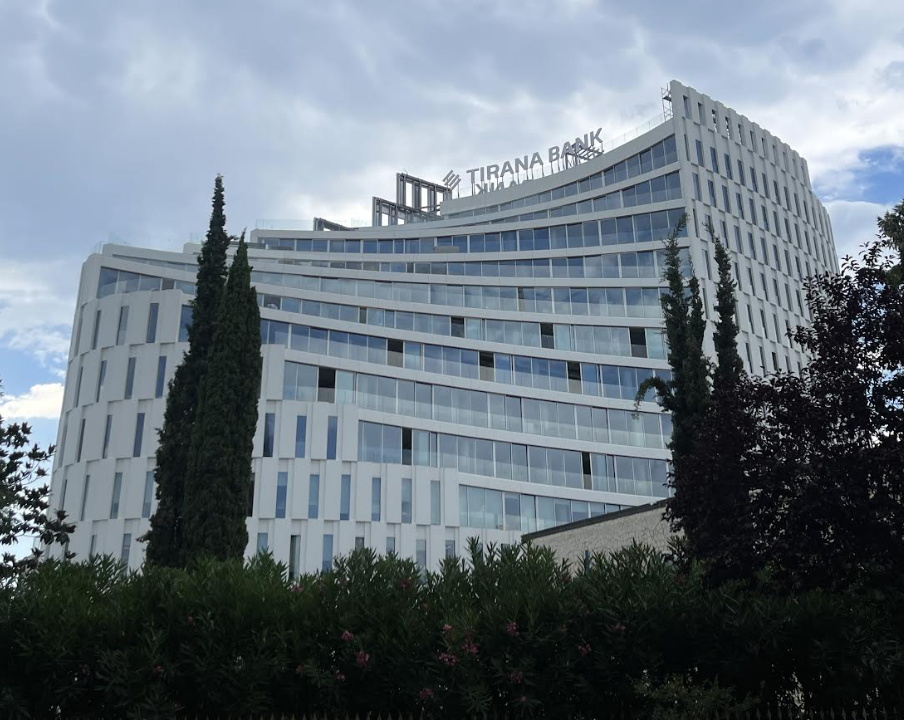
And if you visit Albania today, you can still see the traces of that dramatic transformation. One of the funniest examples?
Mercedes. You will see a LOT of them. Mercedes became strongly associated with Albania during the post-communist period, as imported Western cars became symbols of mobility, prosperity and the new consumer culture.
After decades when private car ownership had been prohibited, suddenly being able to own a Western car meant something. It wasn't just transportation, it was a symbol. The old world was gone and then there is another thing you notice almost immediately: Italian.
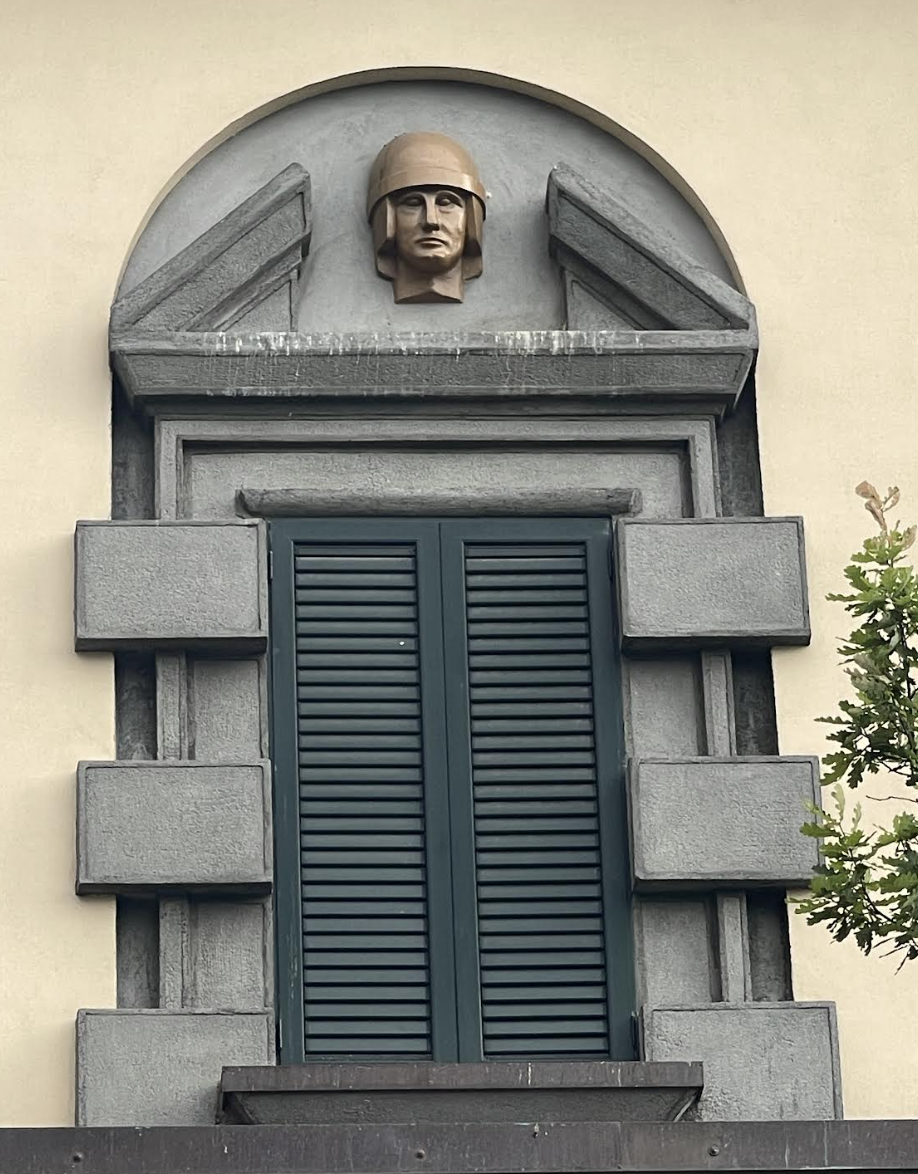
I speak Italian fluently, so I was obviously very happy about this because I was able to communicate with different people i met specially older people. And I wanted to know why.
Italy is incredibly close to Albania, just across the Adriatic. And during the communist period, Italian television became one of the windows through which many Albanians could glimpse the outside world.
Imagine that: your government is telling you that the outside world is dangerous: foreign culture is restricted, travel is almost impossible. And then you watch Italian television and you see cars, fashion, music, restaurants, people traveling, consumer goods… A completely different lifestyle.
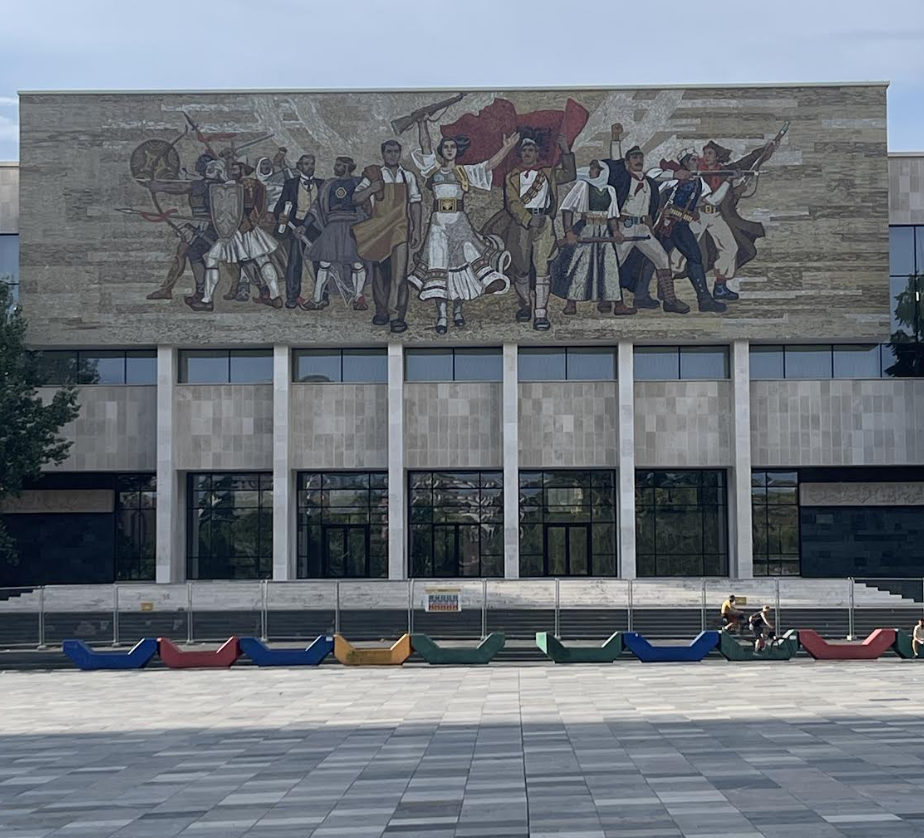
Tirana main Square, Downtown
For many older Albanians, Italian television became unusually familiar. Of course, not every Albanian learned Italian from television. Today, migration, family connections, work, tourism and geography all contribute to the language's popularity.
And then there was Tirana…After everything I had learned about the country's past, I expected something completely different. I imagined a dark, closed, depressing city.
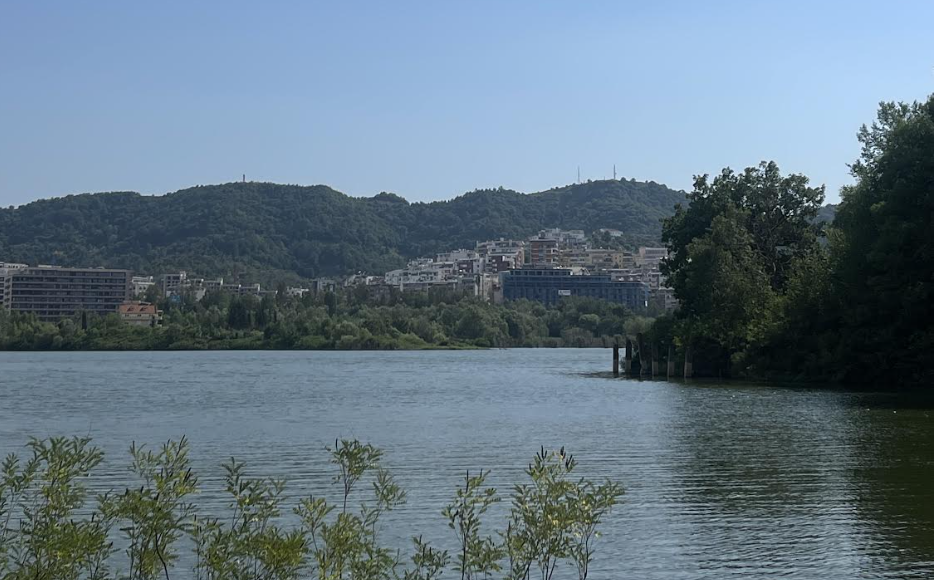
Lake in Tirana at the Park i Madh
And instead of finding a city that felt threatening, I found people everywhere: businesses opened, restaurants everywhere, bars, shisha lounges, music, young people sitting outside, cars everywhere, people dressed up, people laughing, people eating, people staying out late. The city was alive and I felt incredibly safe during that experience.. This is exactly why my first night in Tirana stayed with me.
THE PART I LOVED MOST: THE CULTURE, THE MUSIC… AND THE FOOD
But there was something else I really loved about Albania: The culture.
Because sometimes when people talk about Albania, they focus so much on the bunkers, communism and isolation that they forget something very important: There are people living there.
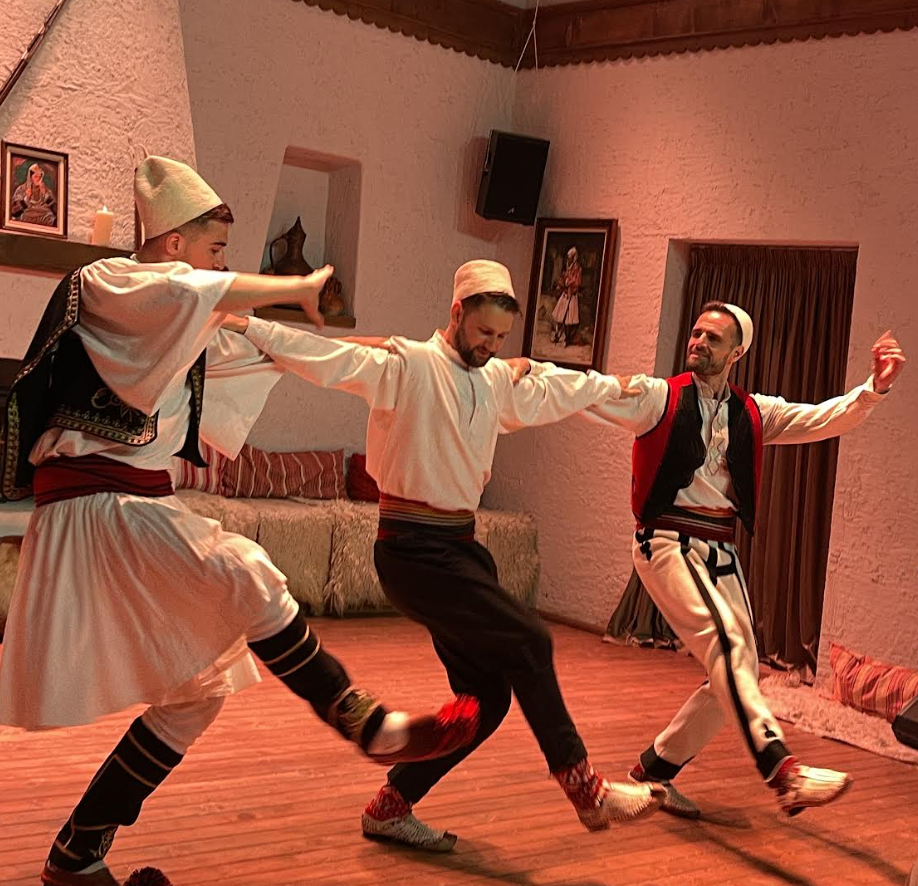
And the culture is incredibly alive. There is something very warm and expressive about Albanian culture: family, food, and celebrations are important. People spend time together and music is everywhere.
What I loved is that Albanian music doesn't feel like one single thing. There are deep traditional roots, regional differences and completely modern sounds happening at the same time. In the south, for example, iso-polyphony is one of Albania's most extraordinary musical traditions.
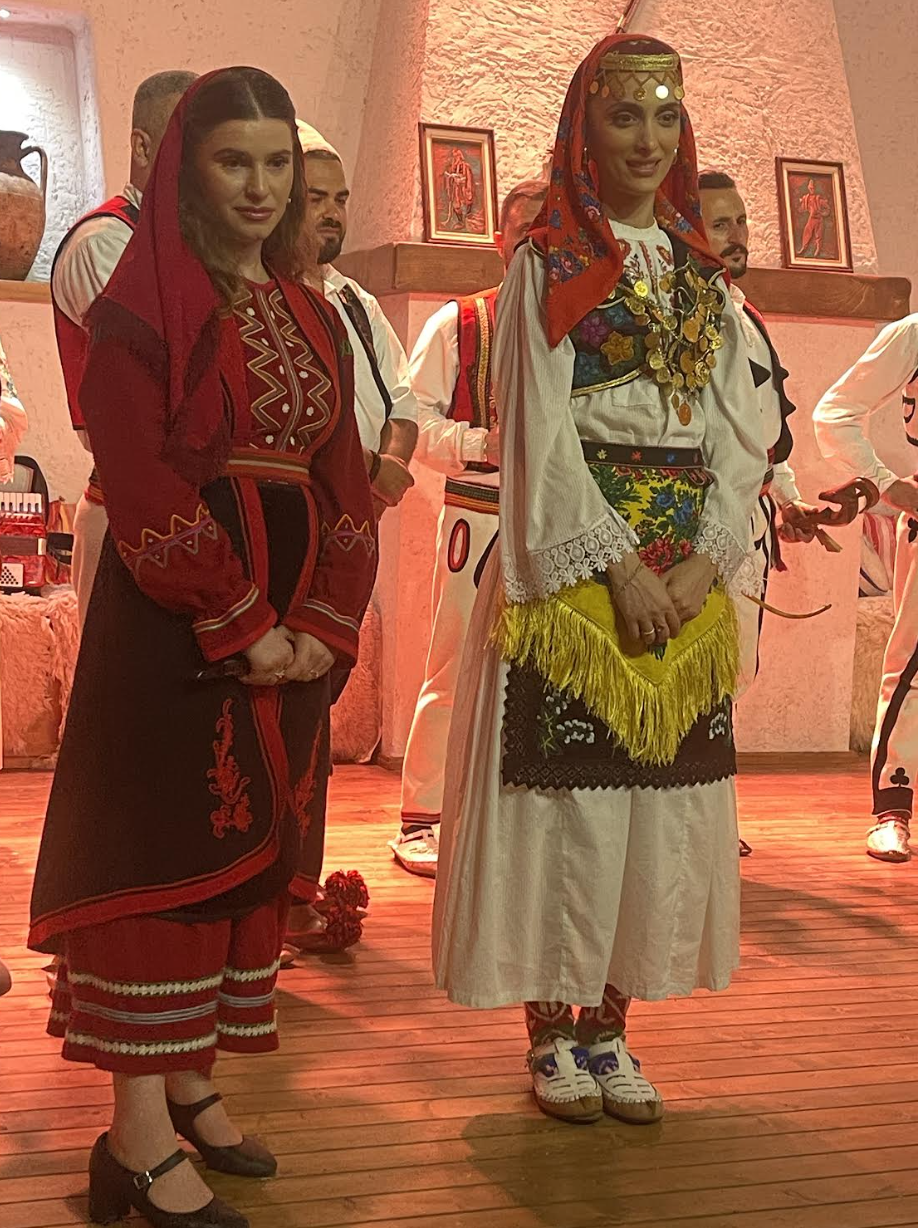
It is a form of multipart singing in which different vocal parts come together to create this almost haunting, incredibly beautiful sound. It is so distinctive that Albanian iso-polyphony has been recognized by UNESCO as Intangible Cultural Heritage.
And then you have the north, with its own musical traditions, instruments and styles. The lahuta, a traditional one-stringed instrument, has historically been associated with northern Albanian epic singing. And then there is the music you hear today: modern Albanian pop, balkan sounds,hip-hop, electronic music, traditional influences mixed with contemporary production.
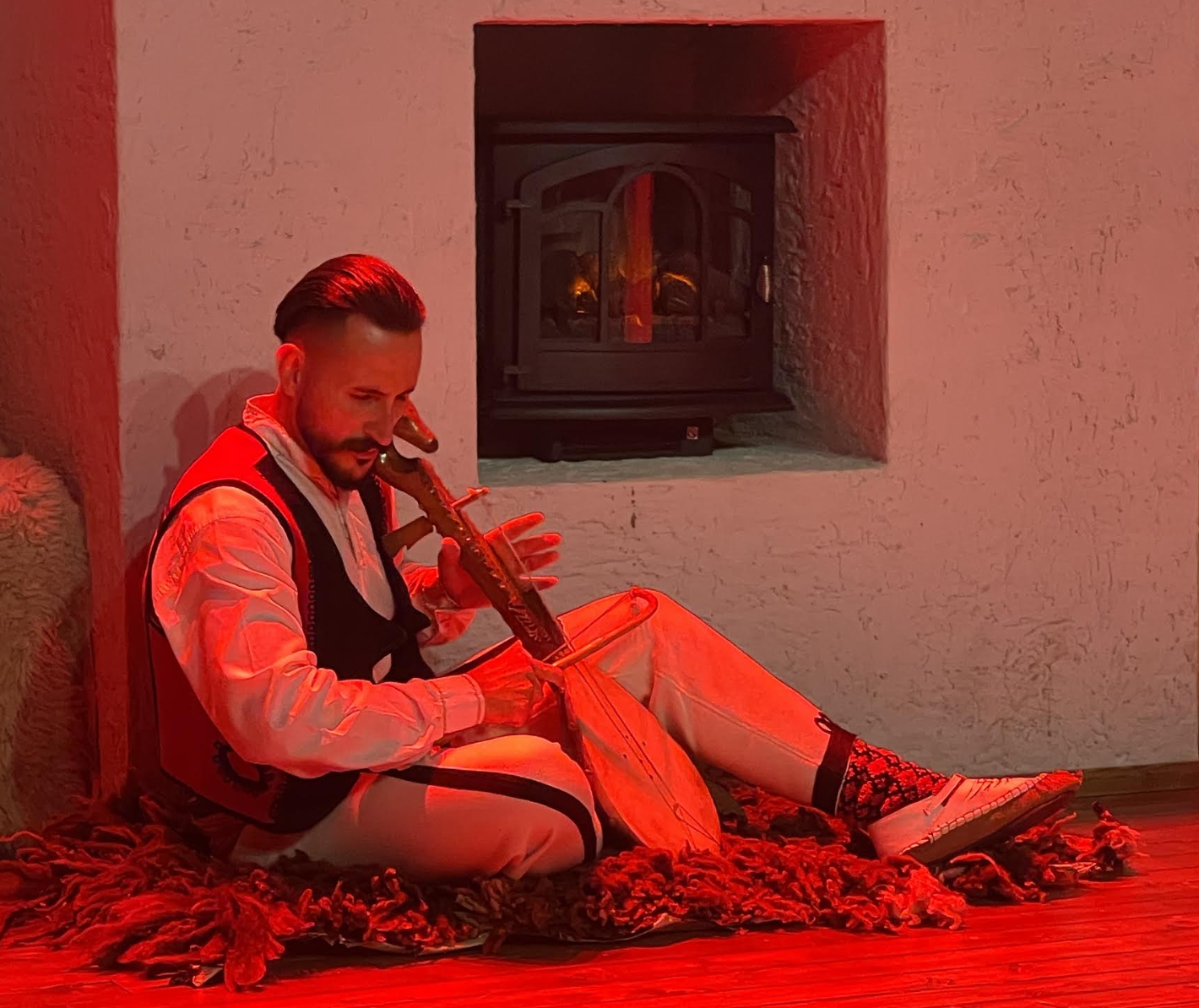
And I loved that contrast because it reminded me of Albania itself. Old and new at the same time.
A country that went from one of the most isolated societies in Europe to a place where young people are completely plugged into global culture.
Now let´s talk about food! Albanian portions are not normal, they are HUGE. Seriously…. You order a normal dinner and suddenly there is enough food on the table to feed 2 people. I also noticed there are not many vegetarian options maybe because they were vegetarian for such a long time…
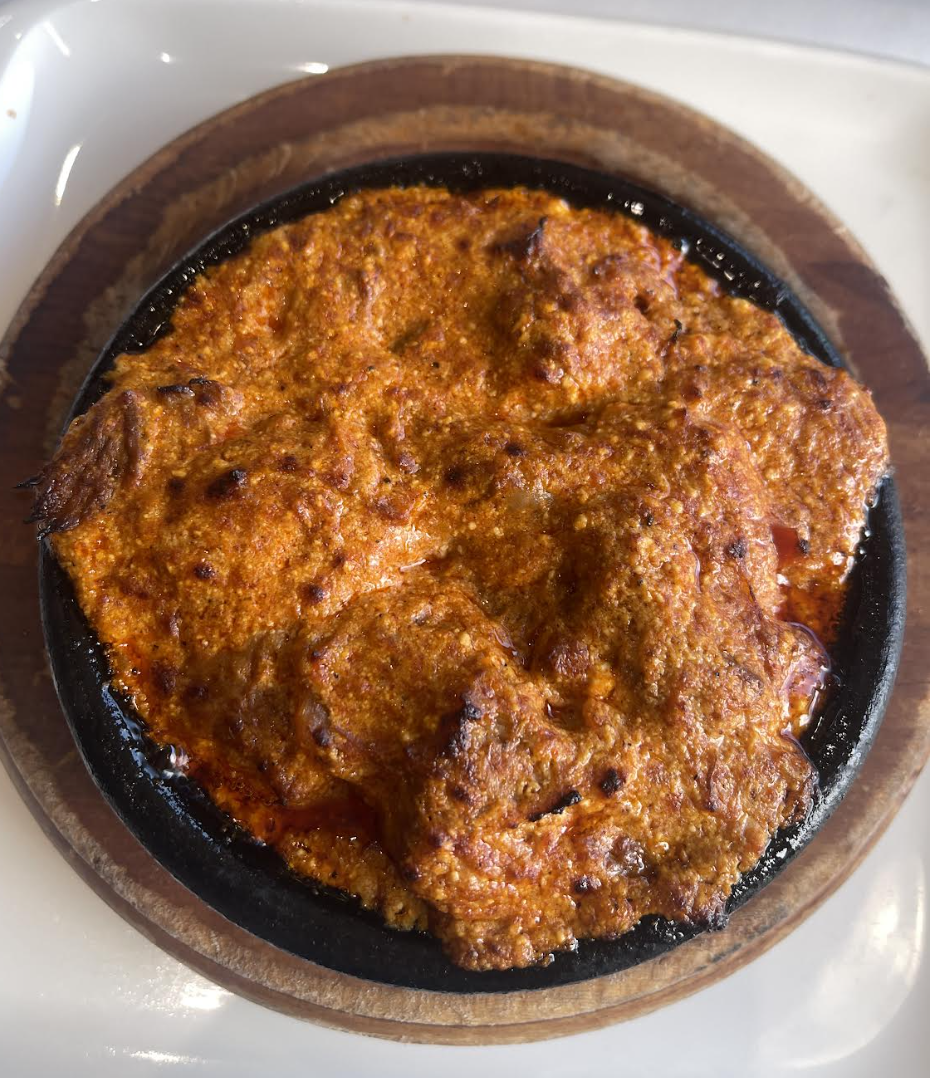
Tavë Dheu is a traditional dish made with beef, tomatoes, and gjizë (fresh cheese similar to cottage cheese), peppers and spices.
Albanian cuisine reflects the country's complicated geography and history: mediterranean, balkan, ottoman, italian and adriatic influences. And of course, local Albanian traditions.
SO… WHY DOES ALBANIA FEEL SO DIFFERENT?
I think this is the biggest thing I took away from the country. You look at a map and think:"Okay. Balkans. I know what I'm getting." And then Albania says: Nope.
First of all, historically and politically was copletely different. It has always remained a separate country… Albania under Hoxha went in the opposite direction: more control, isolation, suspicion and self-reliance.
So although Albania is geographically part of the Balkans and shares historical connections with its neighbors, its modern history took a very different path.
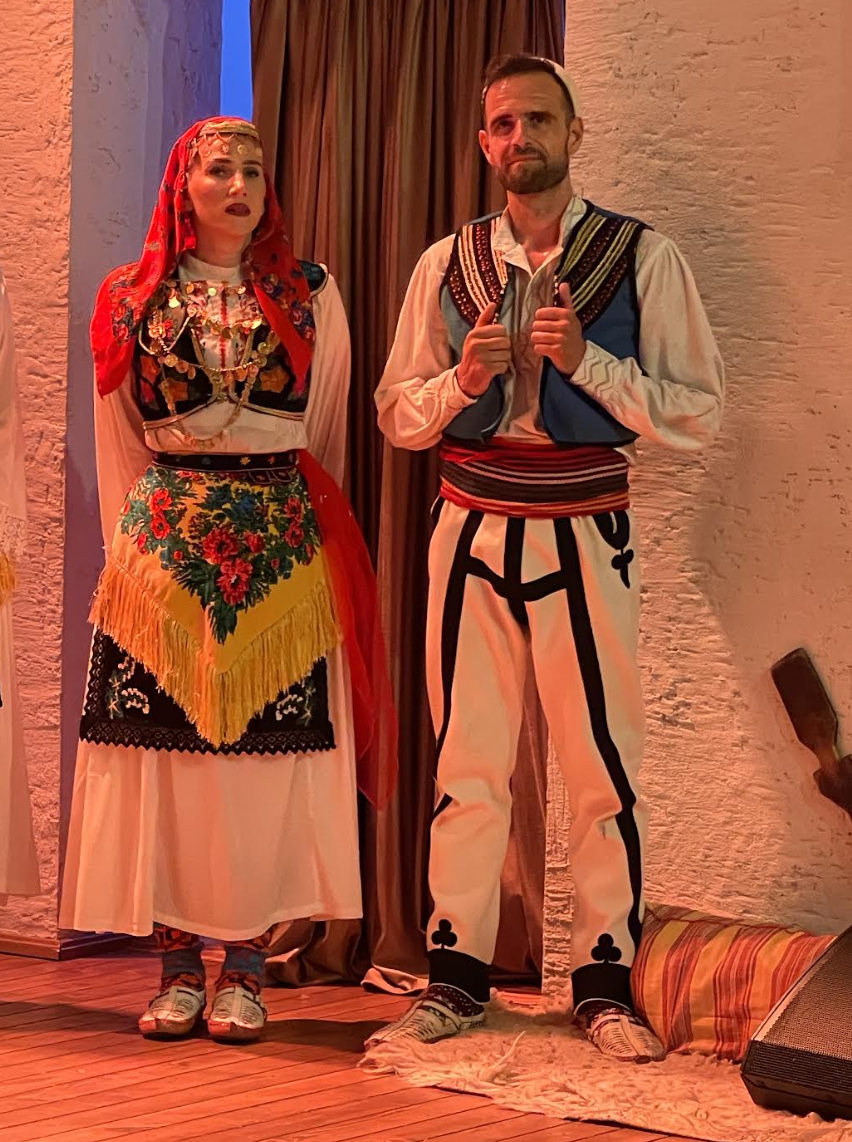
And you can still feel that difference today. It is a country of contrasts where you can have a coctail next to a bunker and find an orthodox church next to a Mosque.
And maybe that's why Albania surprised me so much.
ALBANIA, I MISJUDGED YOU…sorry
If you want to visit a unique country that is full of contrasts, culture, and history, go to Albania. Go because you might arrive with one idea of Albania…and leave realizing that you knew almost nothing about this country. I certainly did…
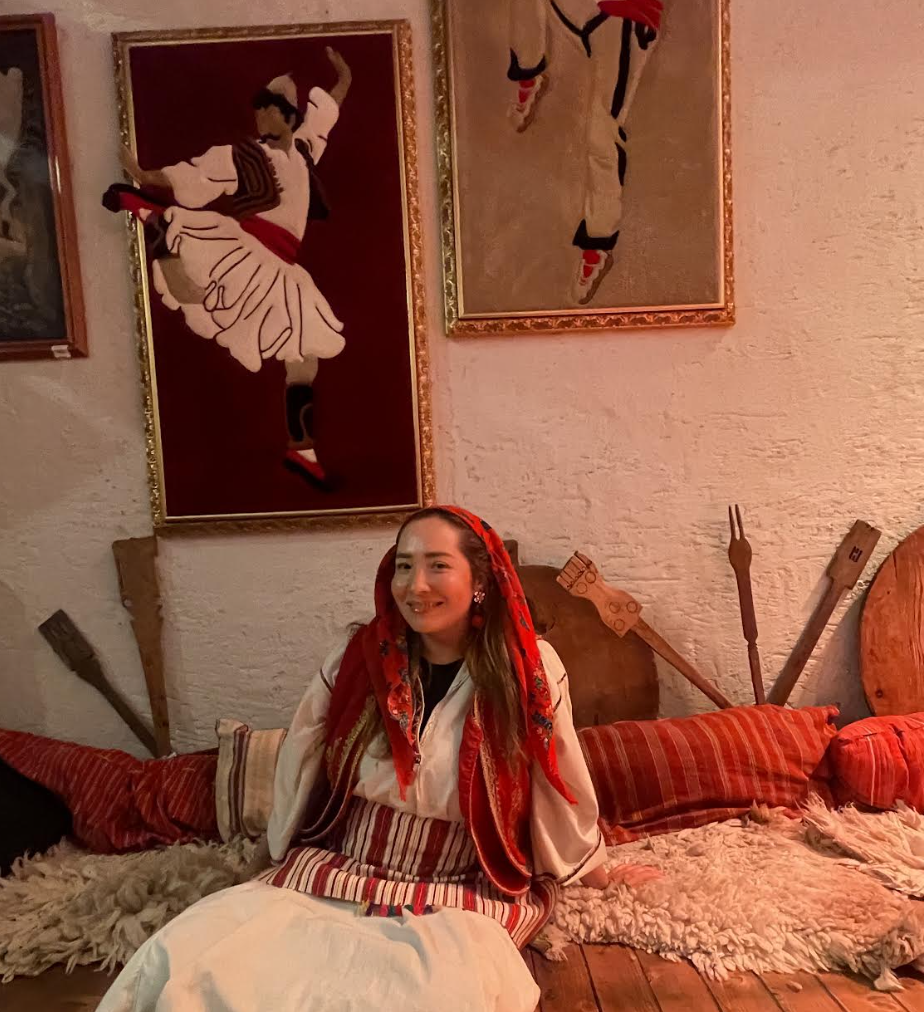
And honestly? I totally loved the country, I was very happy there.
I want to dedicate this article to Mister Artan, he was the person that got me insterested in Albania while he was an appointed diplomat in Bogotá for some months.
Natalia Cortes
September 2026